
Travertine slabs and tiles, filled or unfilled
Travertine is a limestone that formed at a spring, and the gas escaping while it set left the holes that define it. Every decision on this page comes back to those pores: whether they are filled, which way the block was sawn to expose them, and what happens the first time a fill lets go. AFINISHES supplies travertine in slab and tile and cuts it to size in Karachi.
Six travertines in supply
Travertine is a banded stone, so the way it is cut decides what you see: vein cut runs the bands in straight lines, cross cut opens them into clouds. These six are the colours held or brought in, from the standard beige through silver to red.
6 travertines in this library
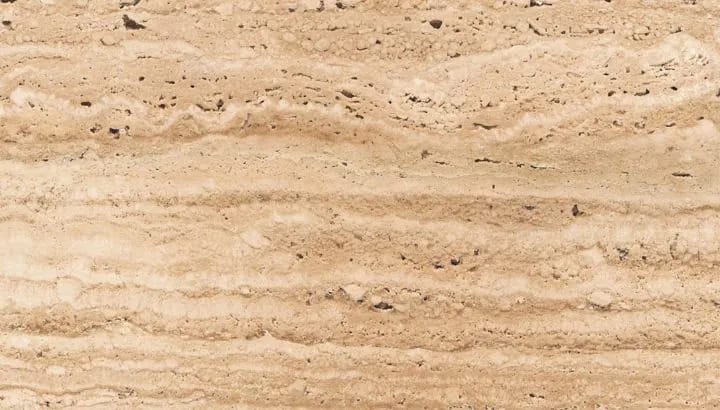
Beige travertine
Standard beige, vein cut
Request this sample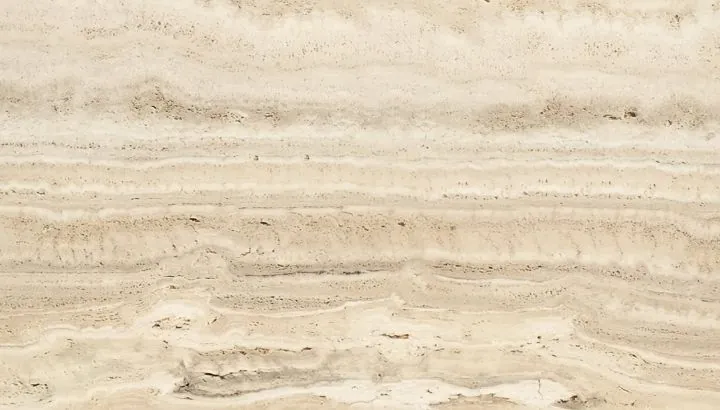
Light beige travertine
Paler, quieter banding
Request this sample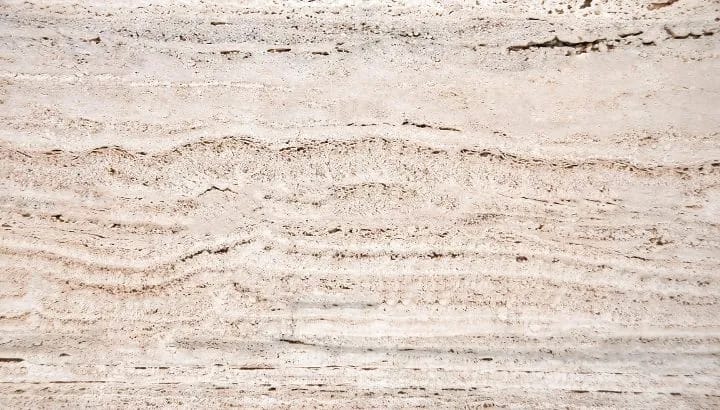
Turkish beige travertine
Imported, open pored
Request this sample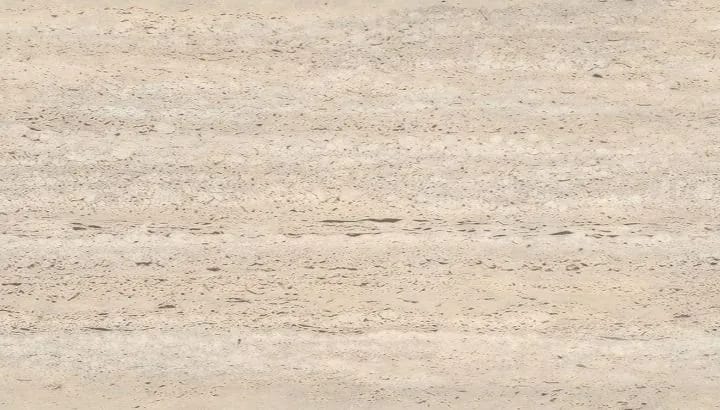
Roman beige travertine
Fine even band
Request this sample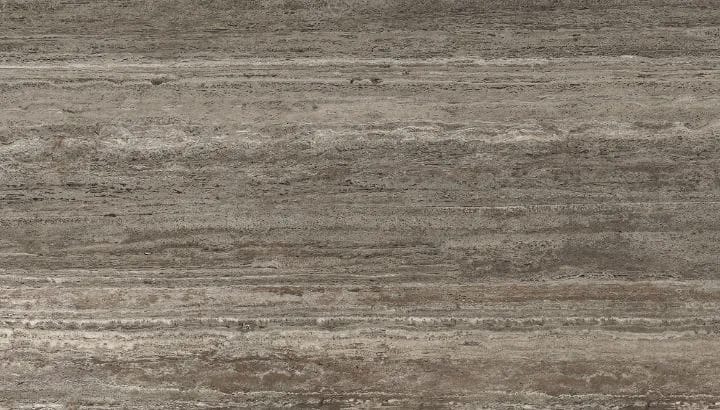
Silver travertine
Grey, strong band
Request this sample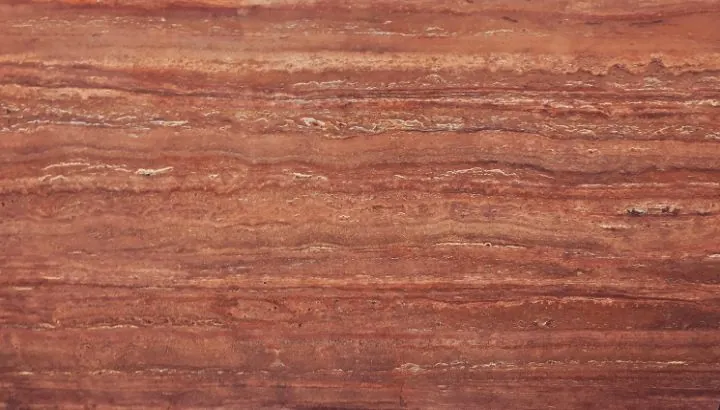
Red travertine
Oxide red, strong figure
Request this sample
State whether the pores are to be filled and whether the cut is vein or cross. Those two answers change the look of a travertine floor more than the colour name does.

Specification
- Format
- Slab and tile
- Pores
- Filled or unfilled
- Cut
- Vein cut and cross cut
- Finish
- Honed, polished, brushed
- Composition
- Calcareous, etches on acid
- Sizing
- Cut to size, Karachi
Filled or unfilled
Filling means the open pores are packed with a grout or resin tinted to the ground colour, and the face is then ground flat. What you get is a continuous plane: a mop crosses it without catching, a wheeled load runs over it, a heel does not find a hole, and the stone reads calmer because the texture has been taken out of it.
Unfilled leaves the pores as the spring left them. The face has a texture you feel through a bare foot, grip is noticeably better once the surface is wet, and the stone reads as the material it is rather than as a flat panel. The trade is housekeeping, because every open pore is somewhere for grit, mop water, soap residue and grout haze to collect and stay.
The split is straightforward. Filled belongs indoors, on anything walked on, wheeled over or cleaned with a mop. Unfilled belongs on a wall, a facade, a terrace or a pool surround, where it dries in the sun, gets hosed rather than mopped, and the grip is doing real work.
- Filled
- Flat plane, mop clean
- Unfilled
- Open pores, better grip wet
Vein cut and cross cut
Travertine is bedded, laid down in layers, and the direction of the saw against those beds sets the pattern on the face. Sawing across the bedding gives the vein cut: the layers show edge on, as long straight striations running the length of the piece. Sawing along the bedding gives the cross cut: the layers show face on, as soft irregular clouds and rosettes with no direction to them.
That difference decides how the material is laid. Vein cut is directional, so it has to be set out to a drawing with every piece running the same way, and it will make a corridor read longer or a wall read taller depending on which way you turn it. Cross cut is non directional and forgiving, which is what you want across a large floor with awkward returns.
The pores present differently as well, and this matters most on unfilled stone. Vein cut opens them as elongated slots strung along the striations. Cross cut opens them as rounder holes scattered across the face. Ask for a sample of both in the finish you intend to specify, because the two look far less alike in the hand than they do in a photograph.
- Vein cut
- Linear striations, directional
- Cross cut
- Clouded rosettes, random
Where travertine belongs, and where it does not
It belongs where a surface is seen and touched more than it is abused. Bathroom and hammam walls take it well, along with feature walls, external cladding, reception floors that are walked on rather than trafficked, terraces, and pool surrounds, where an unfilled honed or brushed face grips when wet and runs cooler underfoot than a dark stone in the same sun.
It is the wrong call on a kitchen worktop. Travertine is calcareous, so citrus, vinegar and descaler etch it, and the fills are softer than the stone holding them, which makes them the first thing to go under a knife or a hot pan. If anything acidic is part of the daily routine on that surface, specify granite and keep the travertine on the wall behind it.
It is also the wrong call on a heavy entrance floor, a retail floor, or anywhere a trolley runs the same line every day. The damage there is not chemical, it is abrasive: grit carried in on shoes works at the fills, and a wheel finds the softest point on the surface and keeps finding it. Where traffic is that heavy, granite or a poured terrazzo tile is the honest specification.
- Suited to
- Walls, cladding, terraces, pool surrounds
- Avoid on
- Worktops, retail floors, trolley runs
Sealing, first clean and the fill that opens
Seal travertine on installation, and before grouting where the programme allows it. A penetrating sealer soaks in and leaves nothing on the surface, which is what you want; a film sealer sits on top and eventually wears through in patches. Sealing first also keeps grout haze out of the pores on unfilled stone, and grout haze in an open pore is difficult to get back out.
After that the routine is a neutral pH cleaner and as little standing water as the room allows. No acidic cleaner, no bleach, no abrasive pad. On unfilled stone use a soft brush rather than a flat mop, because a mop drags residue into the pores instead of lifting it out.
A fill will open eventually on a floor that is used, and that is not a fault in the stone. The fill is softer than the travertine around it, so it wears and picks out first, usually along a traffic line or under a door swing. It is repairable: the void is cleaned out, refilled with a matched grout or resin, and honed back level with the surrounding face. Note the fill colour at handover and keep a few spare pieces, and the repair stays invisible. On unfilled stone there is nothing to fail, which is the whole trade: no fills to open, and open pores to keep clean instead.
- Sealer
- Penetrating, not film
- Cleaner
- Neutral pH only
- Fill repair
- Refill and hone back level
Supplied and cut to size in Karachi
AFINISHES manufactures concrete tile and supplies natural stone. Travertine is bought as block and slab and worked here: sawn, calibrated, filled where filled stone is specified, honed or polished or brushed, edged and cut to the sizes on your drawing. We do not quarry it, and the distinction is worth keeping straight when you are asking what can be changed and what cannot.
What can be changed is everything after the block. The cut direction, the fill, the finish, the format and the edge profile are all set here, so filled cross cut honed tile at one size and unfilled vein cut brushed slab at another can come off the same supply for the same project.
What cannot be changed is the stone. Blocks run out, and travertine bought months apart differs in ground tone and in how open the pore structure runs. Order the area in one lot, take spare pieces at the same time, and dry lay a run before fixing so the variation is spread across the floor rather than pooled in one bay.
- Worked here
- Sawn, filled, finished, edged
- Not quarried
- Block and slab bought in
- Ordering
- One lot, plus spares
What a specifier asks about this material
- Should I specify filled or unfilled travertine?
- Filled for anything indoors that is walked on, wheeled over or mopped, because the pores are packed and ground flat so the surface behaves as a continuous plane. Unfilled for walls, cladding, terraces and pool surrounds, where the open texture grips when wet and the stone dries in the sun instead of holding cleaning water. If a surface is both wet and mopped daily, filled is the safer specification.
- What is the difference between vein cut and cross cut?
- It is the direction of the saw against the bedding of the block. Vein cut goes across the beds and shows them edge on, as long straight striations running the length of the piece, which is directional and has to be set out to a drawing. Cross cut goes along the beds and shows them face on, as soft irregular clouds, which has no direction and is more forgiving across a large floor. On unfilled stone the pores follow suit, reading as slots on a vein cut and as rounder holes on a cross cut.
- One of the fills has come out. Is the floor faulty?
- No. The fill is a softer material than the travertine holding it, so on a used floor it wears and picks out first, usually along a traffic line or under a door swing. The repair is to clean out the void, refill it with a matched grout or resin, then hone the patch back level with the surrounding stone. Note the fill colour at handover and keep a few spare pieces, and that repair stays invisible.
- Do you make the travertine or supply it?
- We supply it. AFINISHES manufactures concrete tile at its own works, and natural stone is a supply relationship: travertine arrives as block and slab, and we saw, calibrate, fill, finish, edge and cut it to size in Karachi. Everything after the block is ours to change. The stone itself is not.
Materials laid alongside this one



Name the codes you need
Send the codes, the format and the area you are covering, and we will come back with physical samples and a quote against that quantity.