
Palladiana terrazzo, as tile or poured on site
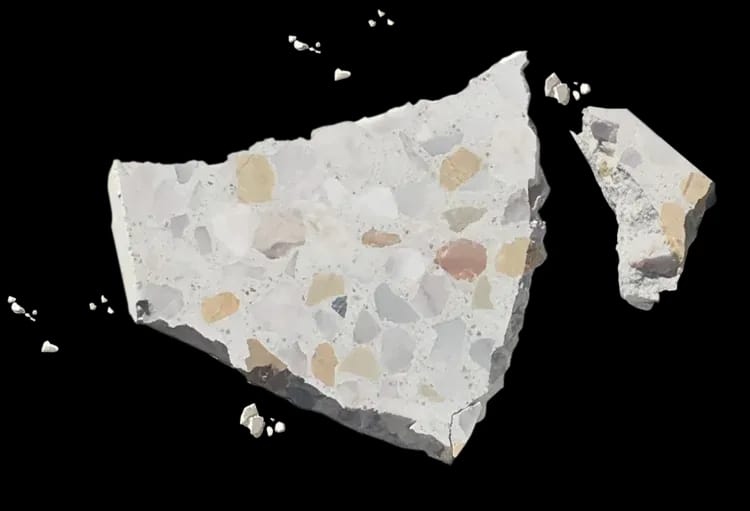
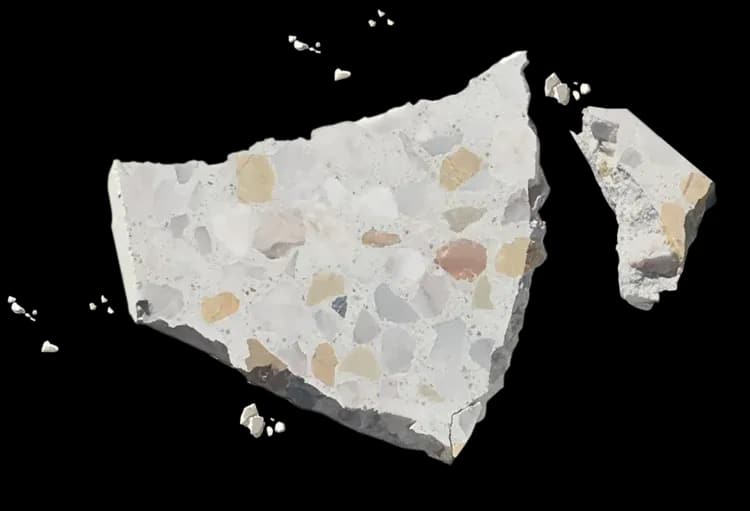
Palladiana is terrazzo built from broken marble slab instead of graded chip. Pieces the size of a hand are bedded into a cement matrix, the gaps between them are filled, and the whole surface is ground flat until slab and matrix sit in one plane. It reads as stone with a drawn joint rather than as speckle, and it is made two ways: as tile at the works, or poured in place on site with no joints at all.
Palladiana, specified two ways
Palladiana is drawn rather than coded: the piece size, the marble the slab is broken from and the matrix colour are chosen for the job, and the same three answers work whether the surface arrives as tile or is poured in place by our own team.
In preparation
The Palladiana library is in preparation. Until the panels are photographed, the honest reference is a sample made to your piece size and matrix colour.
Send the area, the piece size you want and the marble you have in mind, and we will make a sample panel in the matrix colour before anything is committed to the floor.
Specification
- Aggregate
- Broken marble slab
- Piece size
- 50 to 300mm across
- Matrix
- Pigmented cement, colour to order
- Routes
- Precast tile or poured in place
- Finish
- Ground, honed, polished
- Application
- Floor, wall, stair tread, counter
Slab, not chip
Ordinary terrazzo is made from marble crushed and graded to a chip size, and the grade is what decides how the floor reads. Palladiana skips the crusher. Marble arrives as offcut slab, is broken down by hand to pieces roughly between a palm and a hand span, and those pieces are laid into the wet matrix one at a time with the gaps between them kept even.
The consequence is a surface with two things to look at rather than one. Each piece is large enough to show its own veining, the way a marble tile does, and the matrix between them draws a continuous line across the floor. Chip terrazzo resolves into a tone from standing height. Palladiana does not, and it is specified precisely because it does not.
Because the pieces are offcut, this is the technique that puts the largest marble waste back into a floor. A slab too small to sell as a tile is still a Palladiana piece.
- Marble
- Slab offcut, broken by hand
- Placement
- Piece by piece, gaps kept even
- Reads as
- Stone with a drawn joint
Two routes to the same surface
As tile, Palladiana is cast in moulds at the Karachi works, cured, ground and delivered as units. It is set out and laid like any other tile, on the same programme, by a crew that does not need the floor to itself for a week. The trade off is the joint: every tile edge cuts a piece of marble in half, and a grid of those cuts is visible on a large floor if you look for it.
Poured in place, the matrix and the slab go down as one continuous field across the whole area, so there is no tile joint anywhere and the piece layout runs uninterrupted into corners and around columns. Movement joints are still set out where the structure asks for them, and that is a decision made on the drawing rather than discovered later. The trade off is programme and access: the floor is poured, cured, then ground and polished in place, and it wants the area clear and reasonably clean while that happens.
Neither is the better surface. Small areas, phased handovers and anything above ground with a load limit tend towards tile. Large uninterrupted floors, curved rooms and stairs that want the same field running up them tend towards pouring.
- Tile
- Cast at the works, laid as units
- Poured
- Cast in place, no tile joint
- Poured programme
- Pour, cure, grind, polish, seal
What a Palladiana specification has to state
Four decisions change the surface more than anything else, and all four are worth settling on a sample rather than in a meeting. The marble, first: one stone throughout reads calm, and a mix of two or three reads busy and hides wear better. The matrix colour next, because a dark matrix against pale marble draws the joint hard and a matrix matched to the stone almost erases it.
Then the gap. A narrow gap between pieces reads as a stone floor with a fine joint; a wide one reads as marble islands in a cement field, and the wider it goes the more the matrix becomes the floor. Last, the piece size band, which is what separates a rustic surface from a tight mosaic.
Send a physical marble reference if you have one, and ask for a poured sample of the combination before it enters a drawing set. A screen flattens both the veining and the matrix contrast, which are the two things being chosen.
- Decide
- Marble, matrix colour, gap, piece size
- Approve on
- A poured sample, not a screen
- Bespoke matrix
- Matched to reference, per batch
Where it belongs, and where it does not
Palladiana goes where a floor is the largest surface in the room and is meant to be looked at: hotel and office lobbies, retail floors, mosque halls, stair flights, and residential living floors and counters. It takes heavy foot traffic in the same way chip terrazzo does, because it is the same cement matrix and the same full depth aggregate, and it is reground rather than replaced when it eventually dulls.
It is the wrong choice where the surface has to be slip resistant while wet. Ground and polished marble is smooth, and a large piece of it is smooth across a larger span than a chip is. For a ramp, a pool surround, an external step or a wet area with a fall, specify washed terrazzo instead and keep Palladiana for the dry floor it runs into.

What happens on site
For tile, the sequence is the one every terrazzo floor follows: the crew checks the screed and the falls, sets the grid out from the drawing rather than from the nearest door, lays and grouts, then grinds and hones the laid floor in place so the joints close visually and the whole area comes to one level.
For a poured floor the grinding is the same operation, but there is more of it and it starts later, because the field has to cure before anything abrasive touches it. Divider strips, where the drawing calls for them, go in before the pour and not after.
Both are sealed with a penetrating sealer rather than a surface film, before handover. After that the floor wants a neutral pH cleaner and a mop. Acidic cleaners, bleach and abrasive pads etch marble and dull a polish, and no sealer prevents that.
- Sequence
- Set out, lay or pour, grind, seal
- Sealer
- Penetrating, no film
- Cleaning
- Neutral pH
What a specifier asks about this material
- What is the difference between Palladiana and ordinary terrazzo?
- The size of the marble. Ordinary terrazzo uses marble crushed and graded to a chip, between 1.5 and 3 on our own grades, and the floor resolves into a tone from standing height. Palladiana uses broken slab, pieces roughly between a palm and a hand span, so each piece shows its own veining and the cement matrix between the pieces draws a visible line across the floor. Everything else is the same material and the same process: a cement matrix, aggregate through the full depth, ground and polished flat.
- Should I specify Palladiana as tile or have it poured on site?
- Tile if the area is small, phased, or has to be laid on a normal tiling programme by a crew working alongside other trades. Poured if the floor is large and uninterrupted, or curved, or runs up a stair, and the run of the pieces should not be cut by a tile grid. Poured floors need the area clear while they cure and grind, which is the real constraint. Send us the area, the programme and the access and we will tell you which route the site actually allows.
- Can a Palladiana floor be repaired?
- Yes, and for the same reason any terrazzo can: the marble runs through the full depth rather than sitting on the face, so a dulled or scratched floor is reground and re-honed in place and comes back to the same finish. Localised damage in a poured floor is cut out, refilled with the same matrix and the same marble, and ground flush. In a tiled floor the affected tiles are replaced from the same batch and then ground flush with the rest.
- Is Palladiana suitable for a wall or a counter?
- Both, and it suits them well, because a vertical surface is read at close range where the veining in each piece is the point. On a counter, specify the matrix and the sealer with spills in mind: the marble and the cement are both attacked by acid, so a kitchen counter in Palladiana wants the same care a marble counter wants. Wall panels are supplied as tile rather than poured.
Materials laid alongside this one



Name the codes you need
Send the codes, the format and the area you are covering, and we will come back with physical samples and a quote against that quantity.