
Outdoor tiles for a driveway or pathway
Paving units for a driveway, a car porch, a pathway or a service yard, cast heavier than a floor tile and specified for the traffic that will cross them. What holds a paved drive together is never the unit on its own. It is the unit, the pattern it is laid in, the bed it sits on and the restraint at its edge, and those four are specified together.
Sixteen coded outdoor units and fields
The library runs from interlocking paving units through cast patterns to exposed aggregate fields. Pick the face here, then let the traffic set the thickness: what crosses the drive, how heavy, how often and where it turns decides the unit, the bed and the sub base together.
16 codes in this library
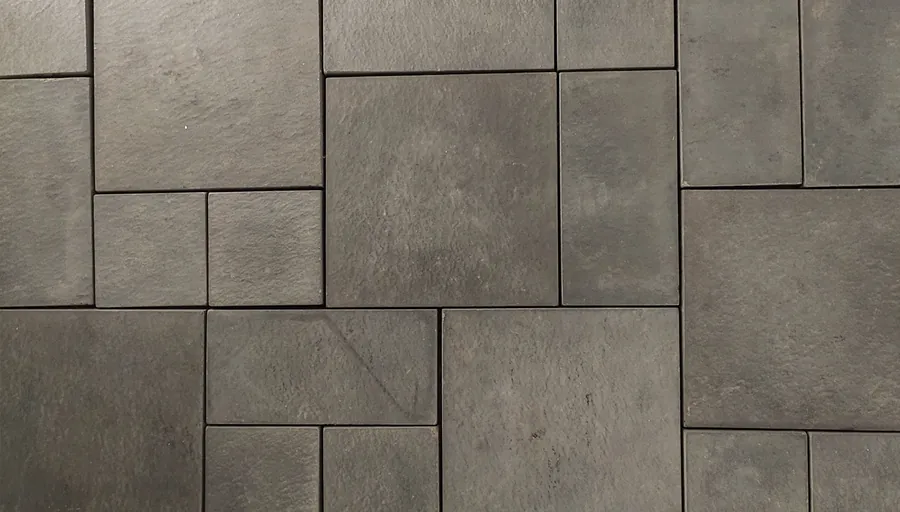
ATW-1001
Modular field, mixed formats
Request this sample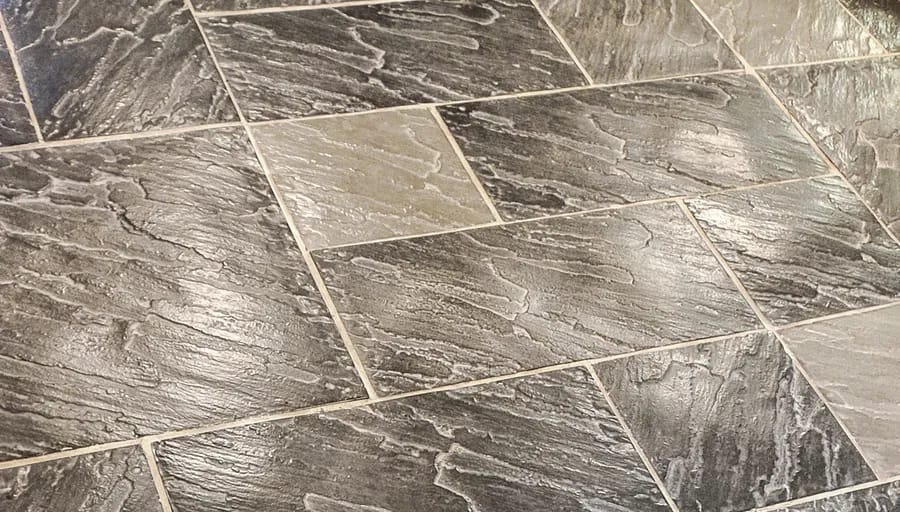
ATW-1002
Riven slab, laid diagonal
Request this sample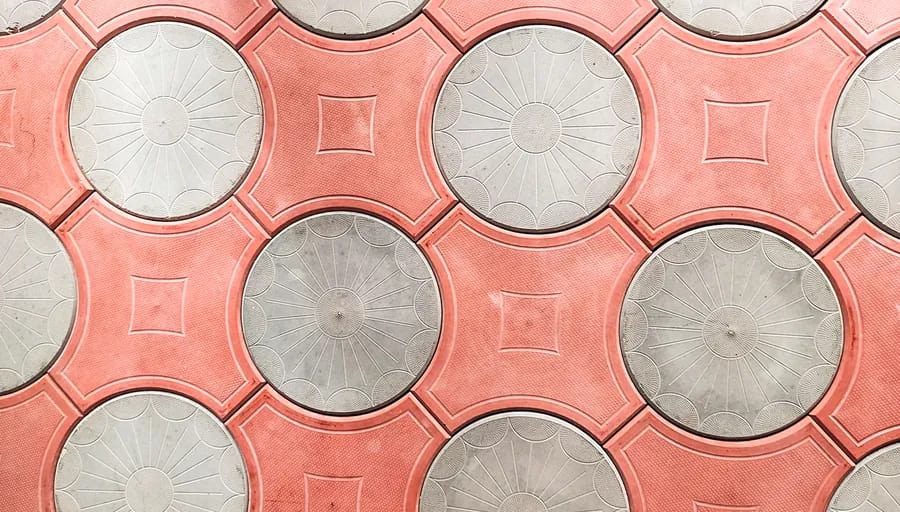
ATW-1003
Disc inset in a red field
Request this sample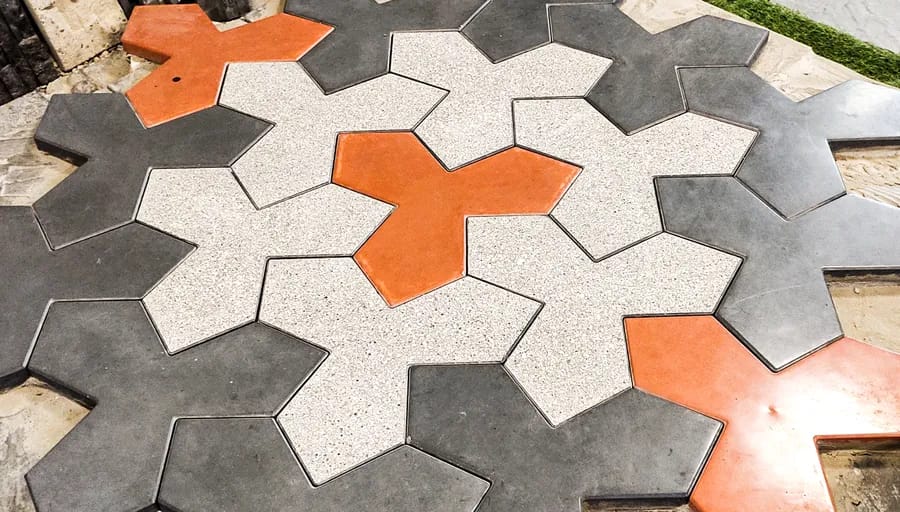
ATW-1004
Interlocking jigsaw unit
Request this sample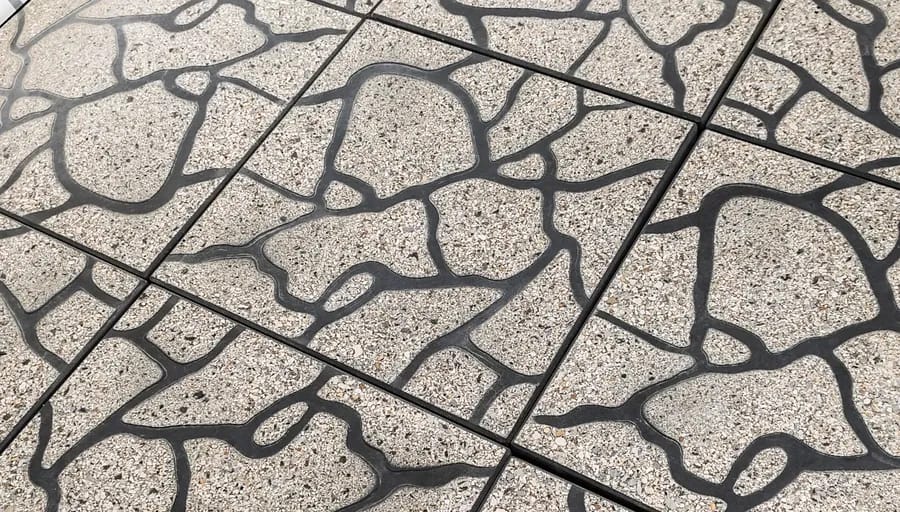
ATW-1005
Crazy paving cast into the unit
Request this sample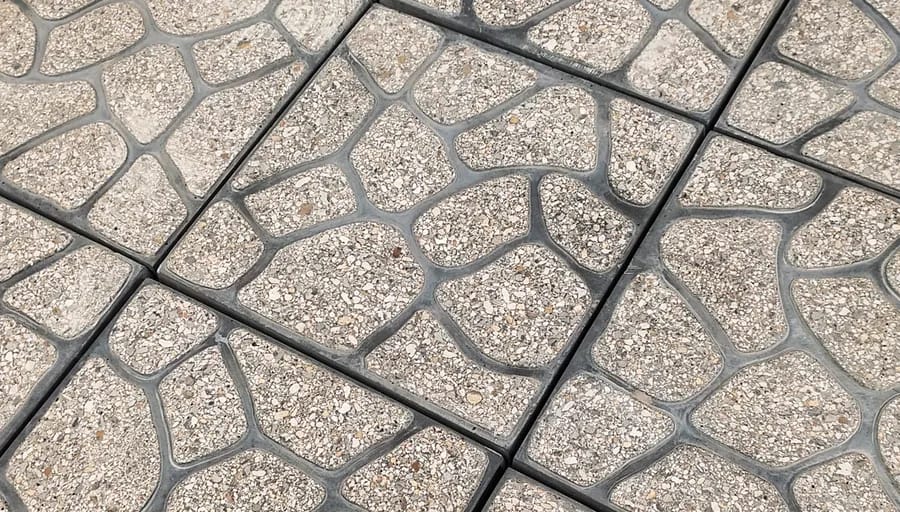
ATW-1006
Crazy paving, coarser aggregate
Request this sample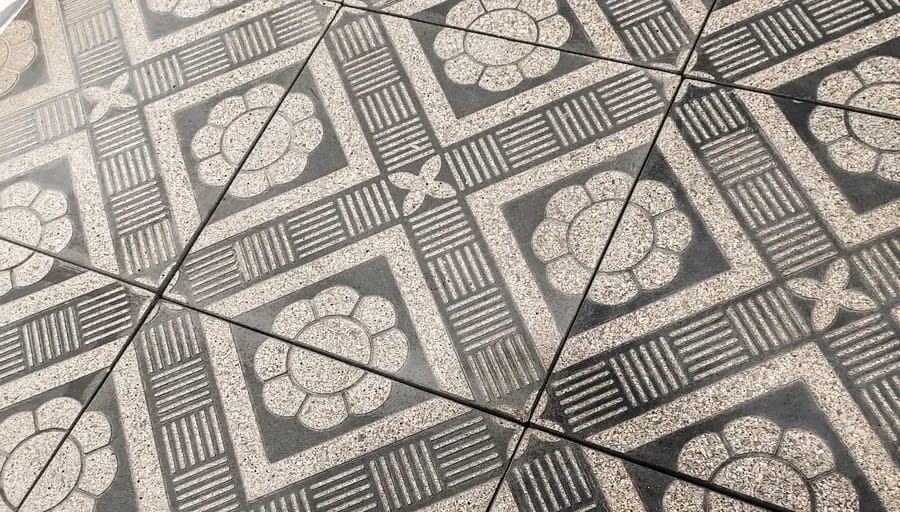
ATG-1001
Geometric medallion, grey
Request this sample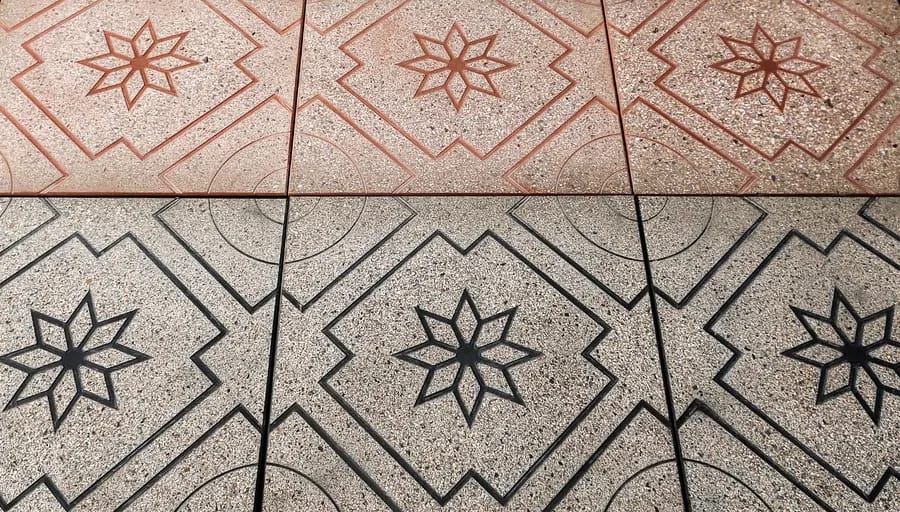
ATG-1002
Star pattern, terracotta line
Request this sample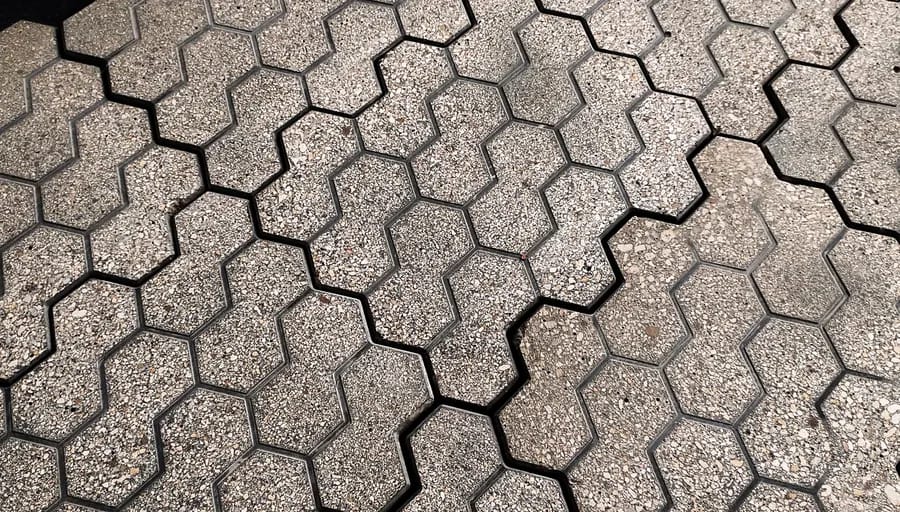
ATG-1003
Zigzag interlock
Request this sample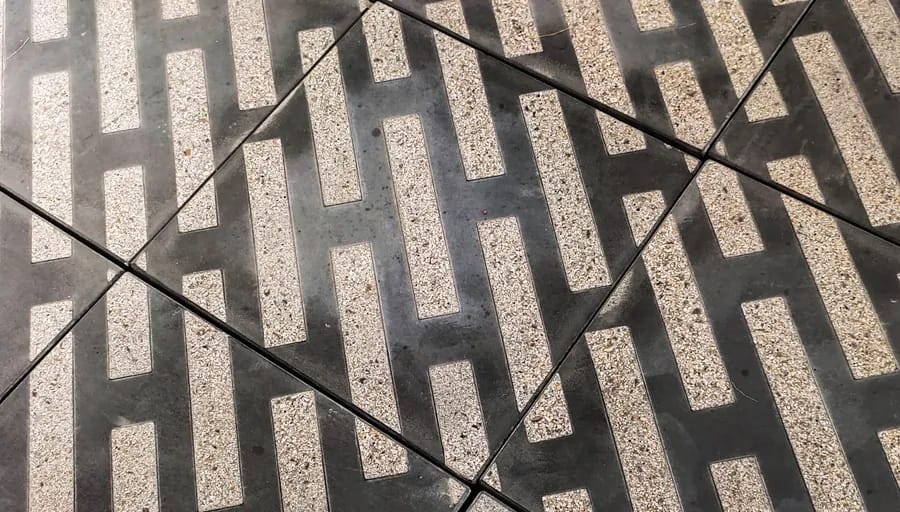
ATG-1004
Hatched bar, charcoal ground
Request this sample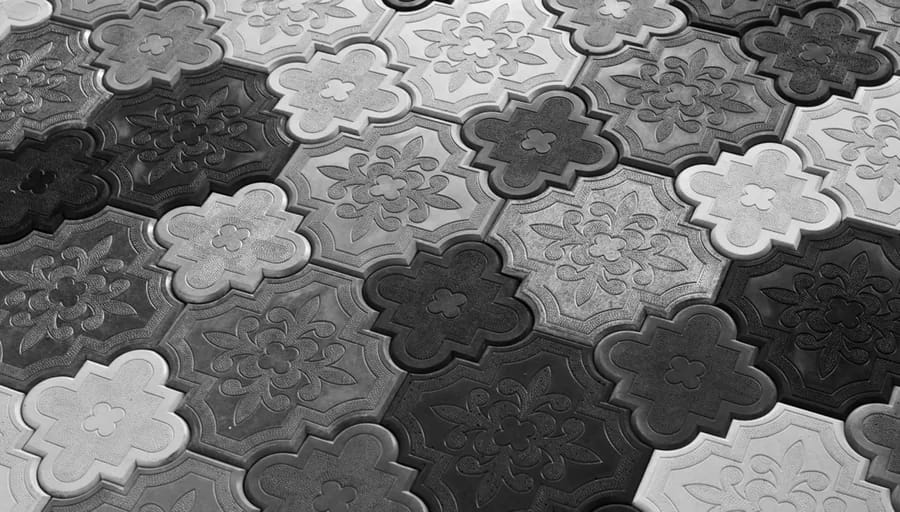
ATY-1001
Clover interlock, three greys
Request this sample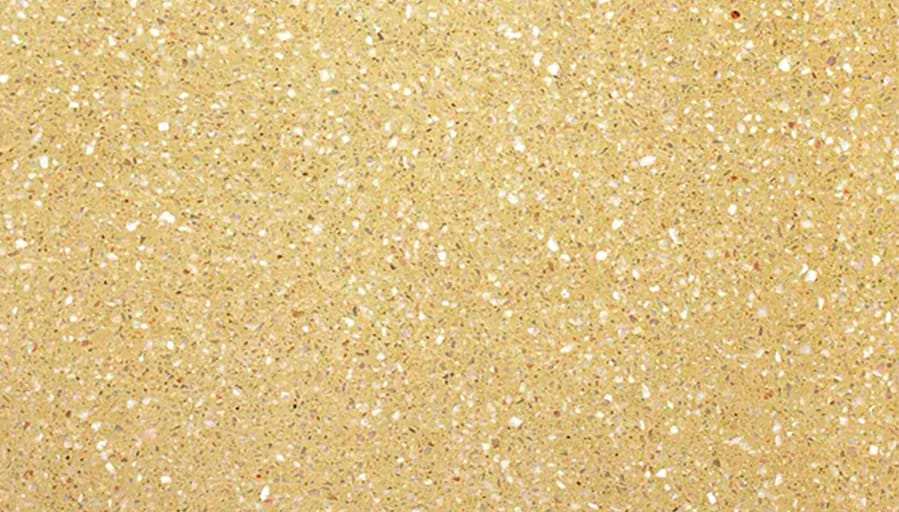
ATY-1002
Fine golden aggregate field
Request this sample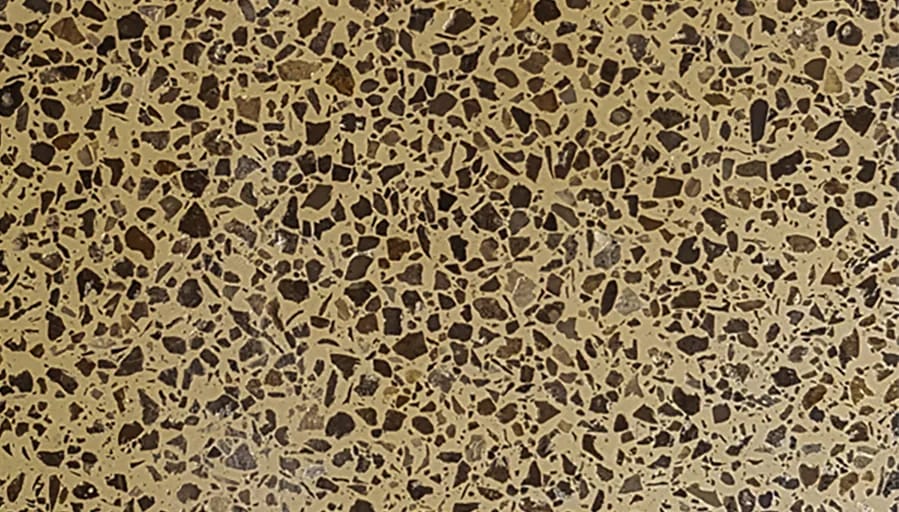
ATY-1003
Olive aggregate, coarse
Request this sample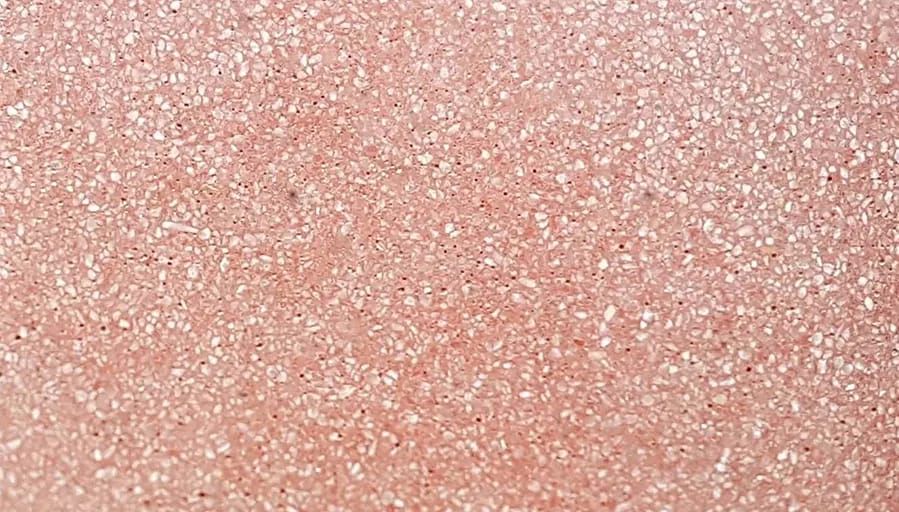
ATR-1001
Fine pink aggregate field
Request this sample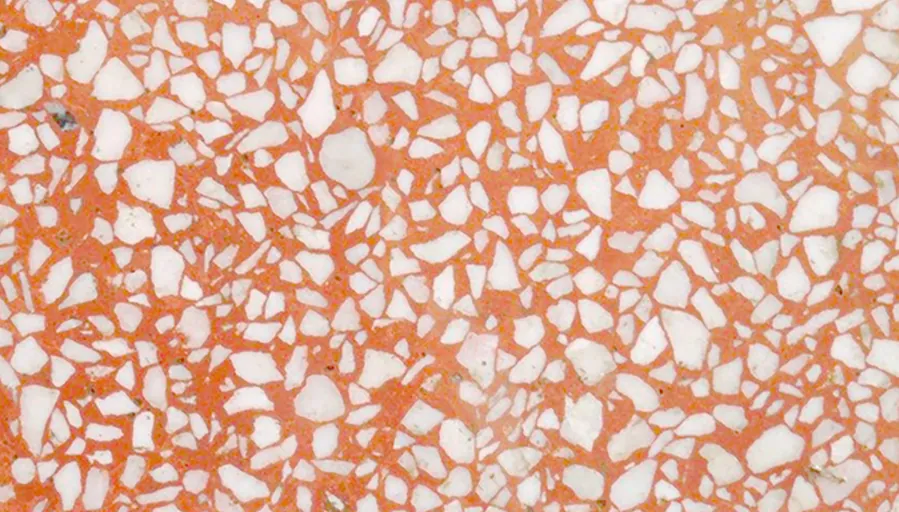
ATR-1002
White chip in an orange matrix
Request this sample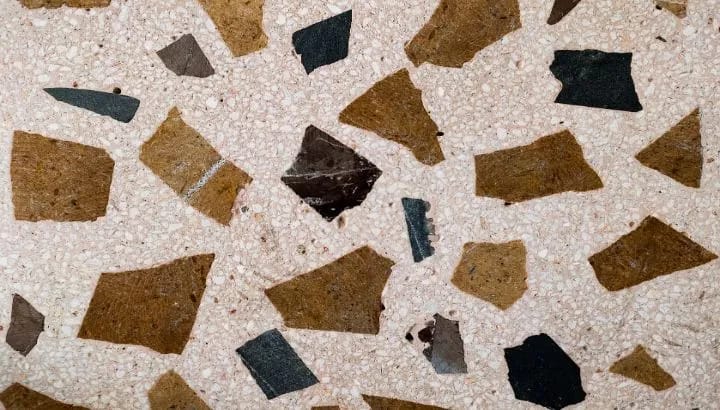
ATP-1001
Broken slab in a white matrix
Request this sample
A code names the face, not the build up. Send the traffic and the turning points with it and the specification comes back as a unit, a bed, a sub base and an edge restraint.
Specification
- Use
- Driveway, car porch, pathway, service yard
- Rated for
- Vehicle load
- Bed
- Sand over a compacted sub-base
- Patterns
- Herringbone, running bond, modular
- Surface
- Textured, not polished
- Joints
- Sand filled, or permeable grit
A paving unit is not a floor tile
An interior floor tile is bonded to a rigid slab. The slab carries the load and the tile only has to be hard, flat and good looking. A paving unit carries the load itself and then passes it into the ground, which is why it is cast heavier and why its thickness is set by the traffic rather than by the look of the edge.
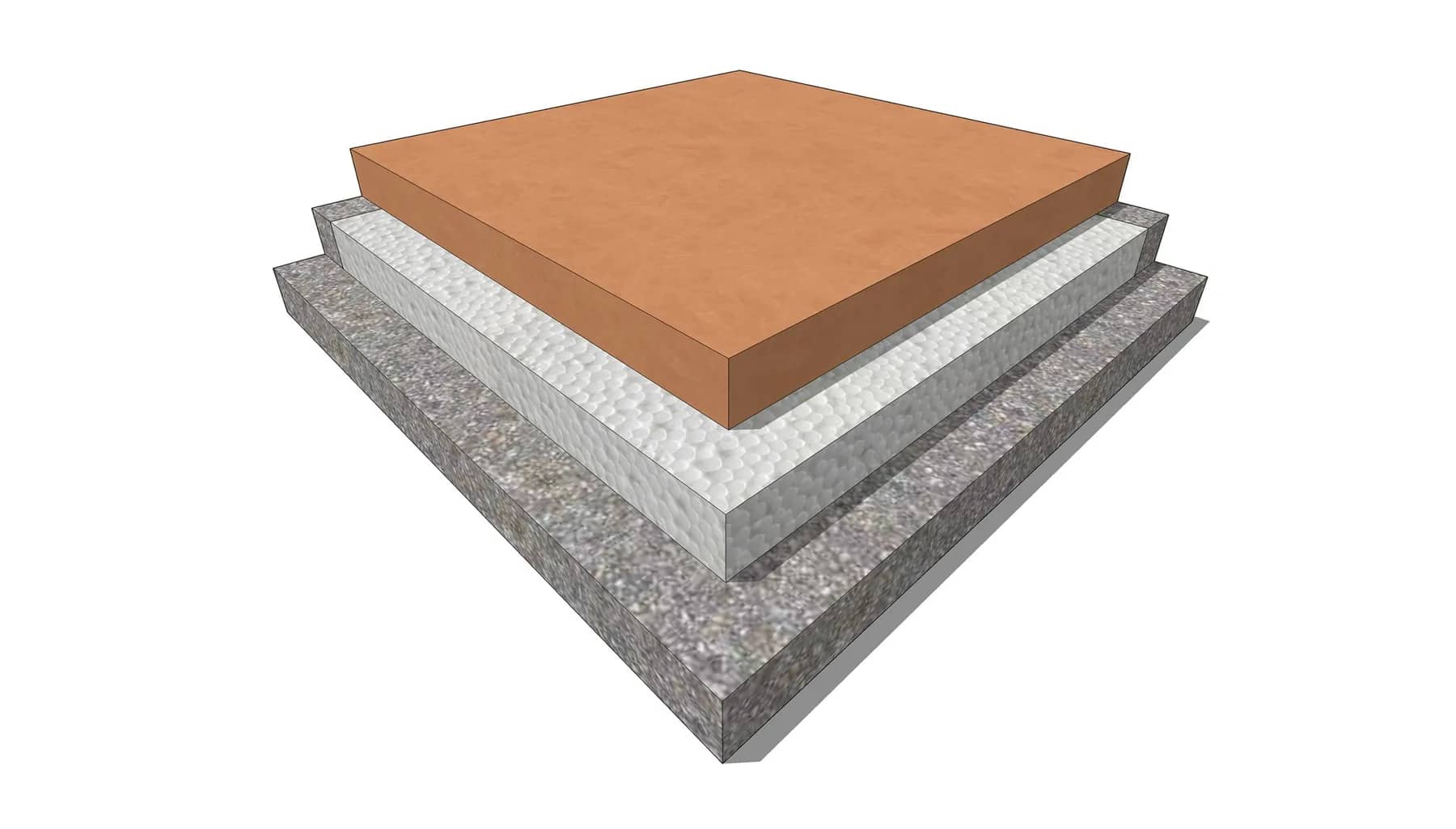
The load path is the whole specification. A wheel presses on one unit, the unit spreads that pressure into a bedding layer, the bedding spreads it into a compacted sub-base, and the sub-base spreads it into the ground. Get the sub-base wrong and no paving unit will save the drive. Get it right and the paving becomes a wearing surface that can be lifted and relaid.
The last part is the edge. A paved field with nothing holding its perimeter creeps outward under braking and steering until the joints open, so a drive needs a restraint: a haunched kerb, an edge beam, or the building itself.
- Load path
- Unit, bed, sub-base, ground
- Perimeter
- Haunched kerb or edge beam
How the specification is set for the traffic
There is no single thickness for everything, because a garden path and a yard that takes a loaded tipper are not the same problem. What we ask for is the traffic: what crosses it, how heavy, how often and where it turns. A path that is walked on takes the lightest unit; a domestic car porch takes more; a shared driveway or a yard that sees deliveries takes more again, and the sub-base under it deepens before the unit does.
Two more answers move the specification. Standing water, because a saturated sub-base loses the strength the whole build up depends on. And turning, because a wheel that turns on the spot scrubs sideways instead of rolling, which loads the unit and its joints differently. Mark where the car will turn on the plan and the pattern and the unit get set for that spot rather than for the average of the drive.
- We ask for
- Traffic, frequency, turning points
- Set together
- Unit, bed, sub-base, edge
Interlock and the laying pattern
Paving works by interlock. Each unit is held by its neighbours, and the pattern decides how well it is held. A stack bond, where every joint lines up in both directions, hands a wheel a continuous line to follow and to open, which is why it belongs on a terrace and not on a drive.
A running bond breaks the joint in one direction, which is enough for a pathway and for a light car porch. Herringbone breaks it in both, so every unit is restrained on all sides and no joint runs more than one unit long. That is what makes herringbone the pattern for a driveway, and specifically for the place where a car turns, because a turning wheel pushes sideways and a herringbone field gives it nothing to push along.
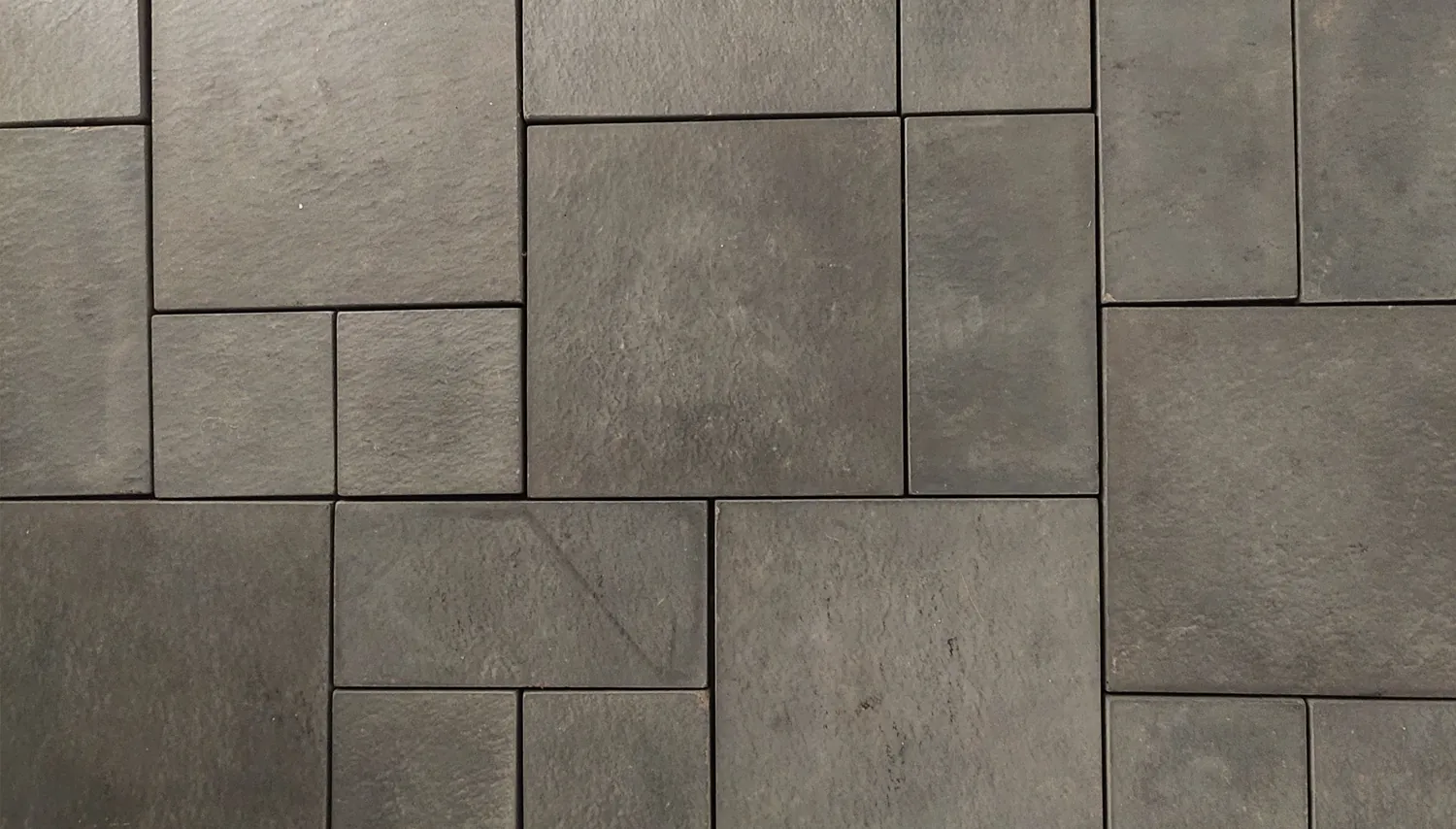
Modular patterns, several formats coursed into one repeating panel, sit between the two. They break the long joint and give a quieter, less directional surface, which is what the drive photographed at the top of this page is laid in.
- Terrace
- Stack bond or modular
- Path, light porch
- Running bond
- Driveway, turning
- Herringbone

Texture, drainage and the joint
Outdoor paving is textured, not polished. A ground finish that reads beautifully on an interior floor becomes a hazard on a wet ramp, so the surface is left with a tooth that holds underfoot and under a tyre when it is wet. It also has to hold its colour under ultraviolet and shed the dust a Karachi summer puts on everything.
Water is the other half of it. The field is laid to a fall toward a channel, a gully or a planted bed, and a fall that can be measured beats a fall that merely looks right. The joints then do more work than people expect: filled with a graded sand a joint flexes, drains a little and can be topped up, while a joint filled with rigid mortar cracks where the field moves and holds water in the crack.
Where the run off has nowhere to go, a permeable build up is the better answer. Wider joints filled with a clean angular grit over an open graded bed let the rain go down through the surface into the sub-base instead of across the surface and out through the gate.
- Surface
- Textured for wet grip
- Sand joint
- Flexes, drains, tops up
- Permeable
- Grit joint, open graded bed
Car porch, garden path, service yard
A car porch is the common case and the one where the pattern matters most, because it is where a car turns, reverses and then stands still and drips. Herringbone in a mid tone, a channel across the mouth so the drive does not water the hall, and a haunched edge where the paving meets planting.
A garden path is the opposite problem. The traffic is light and the units are there to be looked at, so a wider format, a broken joint and a generous sand joint that grows a little moss in the shade all work in its favour, and the path can sit against the lawn on a hidden restraint instead of a kerb.
A service yard takes the heaviest specification on the plot: delivery vehicles, bins dragged across the surface, a tap and a drain. Take the falls to a gully rather than to a boundary, keep herringbone under the wheel track, and accept that this is a surface chosen for a service life rather than for a photograph.
- Car porch
- Herringbone, channel at the mouth
- Garden path
- Wider format, sand joint
- Service yard
- Heaviest build up, fall to a gully
What a specifier asks about this material
- How thick should driveway paving be?
- Thickness follows the traffic, so there is no single answer to quote. Tell us what crosses the surface, how heavy it is, how often it runs and where it turns, and the unit is specified against that. Expect the sub-base to be the larger variable: on a drive that sees delivery vehicles, the depth under the paving usually changes more than the paving does.
- Which laying pattern should a driveway use?
- Herringbone, and particularly wherever a car turns. It breaks the joint in both directions, so every unit is restrained on all sides and a sideways scrub from a turning wheel has no continuous joint to travel along. Running bond is enough for a pathway or a light car porch, and stack bond belongs on a terrace where nothing heavier than a chair crosses it.
- Do the joints let water through?
- A sand filled joint drains a little and can be topped up, which is why it is the default. Where run off genuinely has to go down rather than across, ask for a permeable build up: wider joints filled with a clean angular grit over an open graded bed, so the rain passes into the sub-base. Avoid rigid mortar joints on a flexible paved field, because they crack where the field moves and then hold water in the crack.
- Can paving be laid over an existing concrete slab?
- Yes, provided the slab is sound, drains and is not moving, in which case the paving is bedded over it rather than on a sub-base. Two things to settle first: levels, because the finished surface rises by the depth of the unit and its bed and every threshold and gate swing has to still work, and water, because a slab plus paving needs a fall and a channel or gully to take what the surface sheds.
Materials laid alongside this one

Name the codes you need
Send the codes, the format and the area you are covering, and we will come back with physical samples and a quote against that quantity.