
Washed terrazzo tiles
Washed terrazzo is the same hand poured body as polished terrazzo, stopped at a different point. Instead of grinding the aggregate flat, the surface is washed back so the chips stand above the cement matrix. What you get is a floor you can read with a hand and feel through a shoe, which is what a ramp or a wet threshold needs. It is made two ways: cast as tile at the works, or floated onto a wall in place by our own team, which is the route that gets rid of the joint.
Six washed terrazzo finishes in production
Each code is a base and an aggregate, washed back so the chip stands proud of the matrix. The same recipes are cast as tile at the works or floated onto a wall on site, and a coarser grade gives both more relief and more grip.
6 finishes in this library
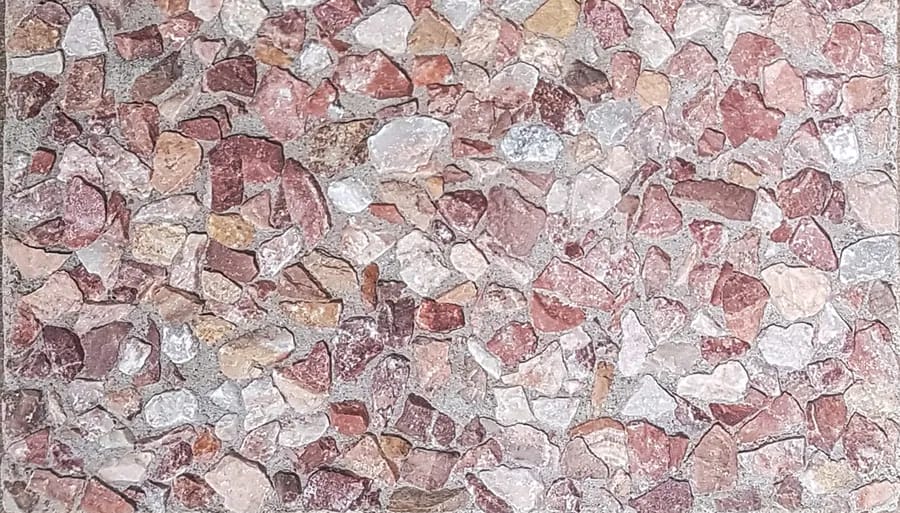
WT-1001
Pink and red marble chip, coarse
Request this sample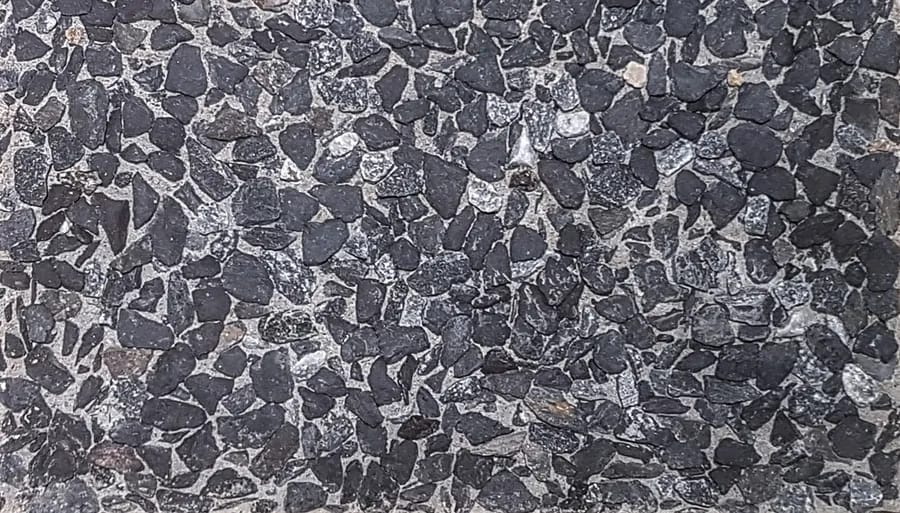
WT-1002
Black and charcoal chip, coarse
Request this sample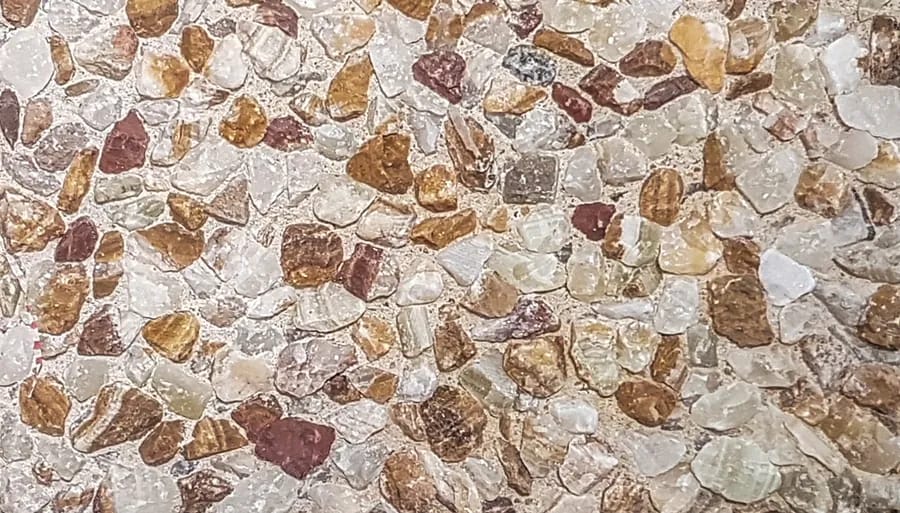
WT-1003
Amber, tan and white chip, coarse
Request this sample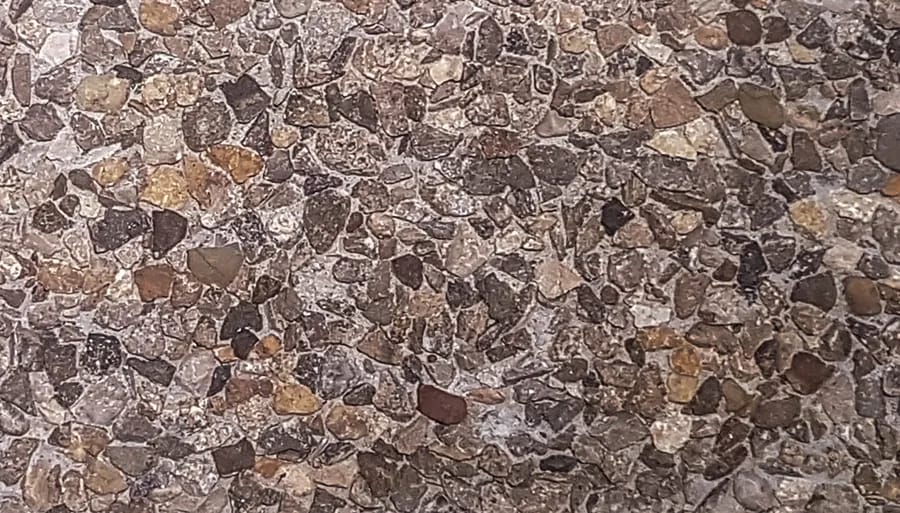
WT-1004
Dark brown and rust chip, coarse
Request this sample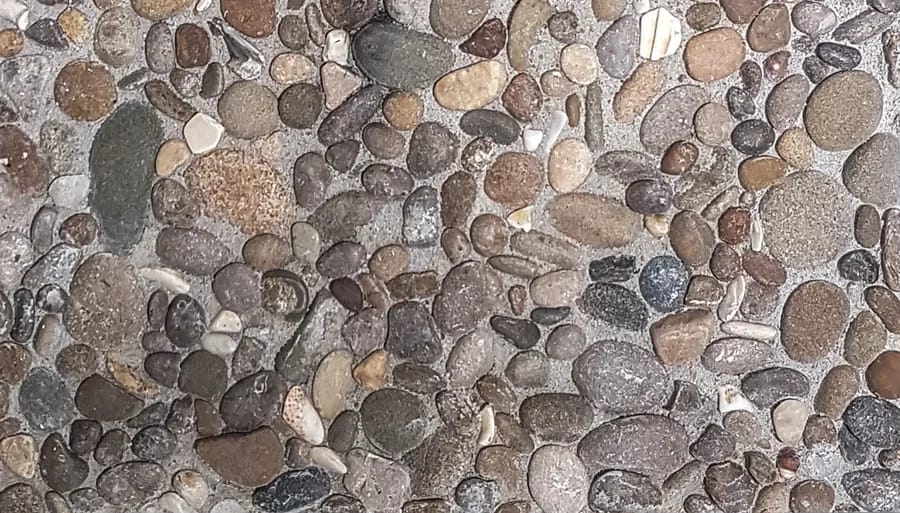
WT-1005
Rounded river pebble, largest grade
Request this sample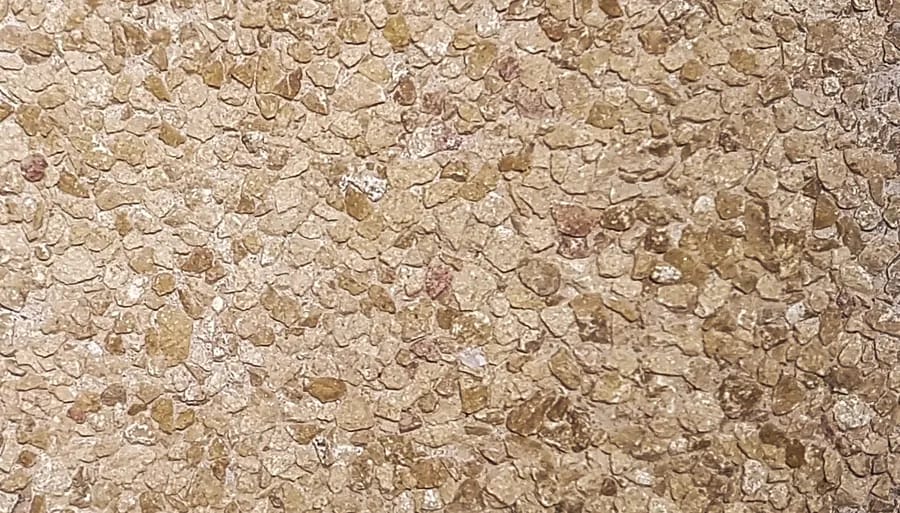
WT-1006
Fine golden ochre chip, even
Request this sample
Read against
Washed terrazzo also draws on the polished terrazzo palette, so a base and aggregate coded there can be washed instead of ground. Name the code, the grade and whether the work is tile or cast in place.

Specification
- Surface
- Aggregate exposed, left proud
- Palette
- Shared with polished terrazzo
- Chip grade
- 1.5 to 3
- Routes
- Precast tile or cast in place
- Format
- Cast to order
- Seal
- Penetrating, no film
- Application
- Ramps, terraces, pool surrounds
Washed back, not ground down
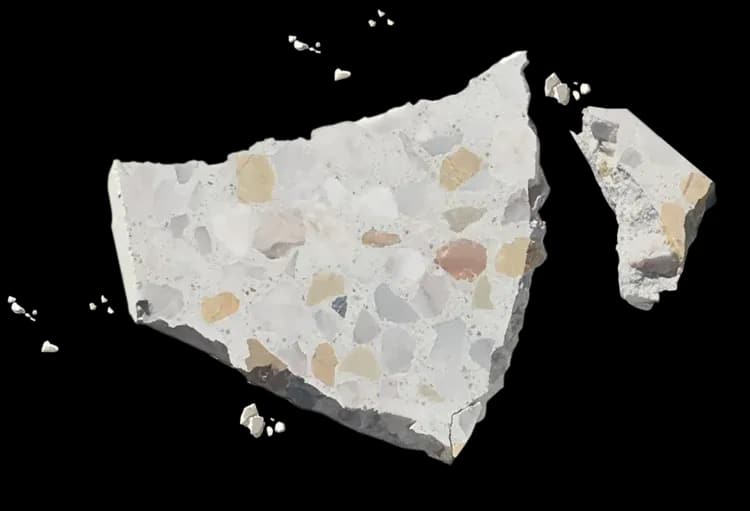
The mix is the same as the polished tile: marble aggregate stirred through a pigmented cement matrix and poured by hand at the Karachi works. The difference is what happens after the cure. Rather than grinding the face flat, the surface is washed so the matrix sits back and the aggregate is left standing above it.
That leaves a face with relief in it. Run a hand across a polished tile and it is one plane; run it across a washed tile and you feel every chip edge. Underfoot the same relief is what gives a wet surface something to hold, and it is why this tile ends up on slopes and thresholds instead of in a lobby.
- Body
- As polished terrazzo
- Face
- Washed, not ground
- Relief
- Aggregate stands proud
Where the grip earns its keep
Ramps first, because a ramp is the one place a smooth floor is a liability rather than a preference. Then pool surrounds and the strip of deck that stays wet all afternoon, roof terraces that take rain and hose water, external steps and landings, and the threshold where an internal floor meets a courtyard.
It also suits a walkway that gets washed down rather than mopped, since the texture does not mind a stiff brush. We do not publish a slip rating for it, because a rating belongs to a tested assembly rather than to a material. What we can say is that the exposed aggregate is there for exactly this reason, and a sample under a wet hand tells you more than a number would.
- Ramps
- Internal and external
- Wet zones
- Pool surrounds, terraces
- Thresholds
- Interior to courtyard
Cast on the wall, on site
The same mix that goes into a tile can be applied to a wall where it stands. Our own team works on site: the substrate is prepared, the pigmented cement and its aggregate are floated on in place, and the face is washed back before the mix has fully cured so the chip is left proud. What you get at the end is one continuous surface instead of a field of units.
That is the reason to choose it. A tile brings a joint every 12 or 16 inches, and on a wall a joint grid is the first thing the eye reads. Cast in place there is no grid, so the aggregate runs unbroken around a return, up a stair wall or across a curved face that no rectangular tile would sit on without cutting.
It asks for more from the programme than a tile does. The substrate has to be sound, true and ready before the crew arrives, the work is wet and takes protection from following trades, and the finish is judged on an approved sample panel made on the actual wall rather than on a plate in an office. The one thing it gives up is replacement: a tile can be lifted and swapped from the same batch, while a cast surface is patched and reground, which is a repair rather than a substitution.
- Applied by
- Our own site team
- Joints
- None
- Approval
- Sample panel on the wall
- Repair
- Patched and reground
Against a polished floor
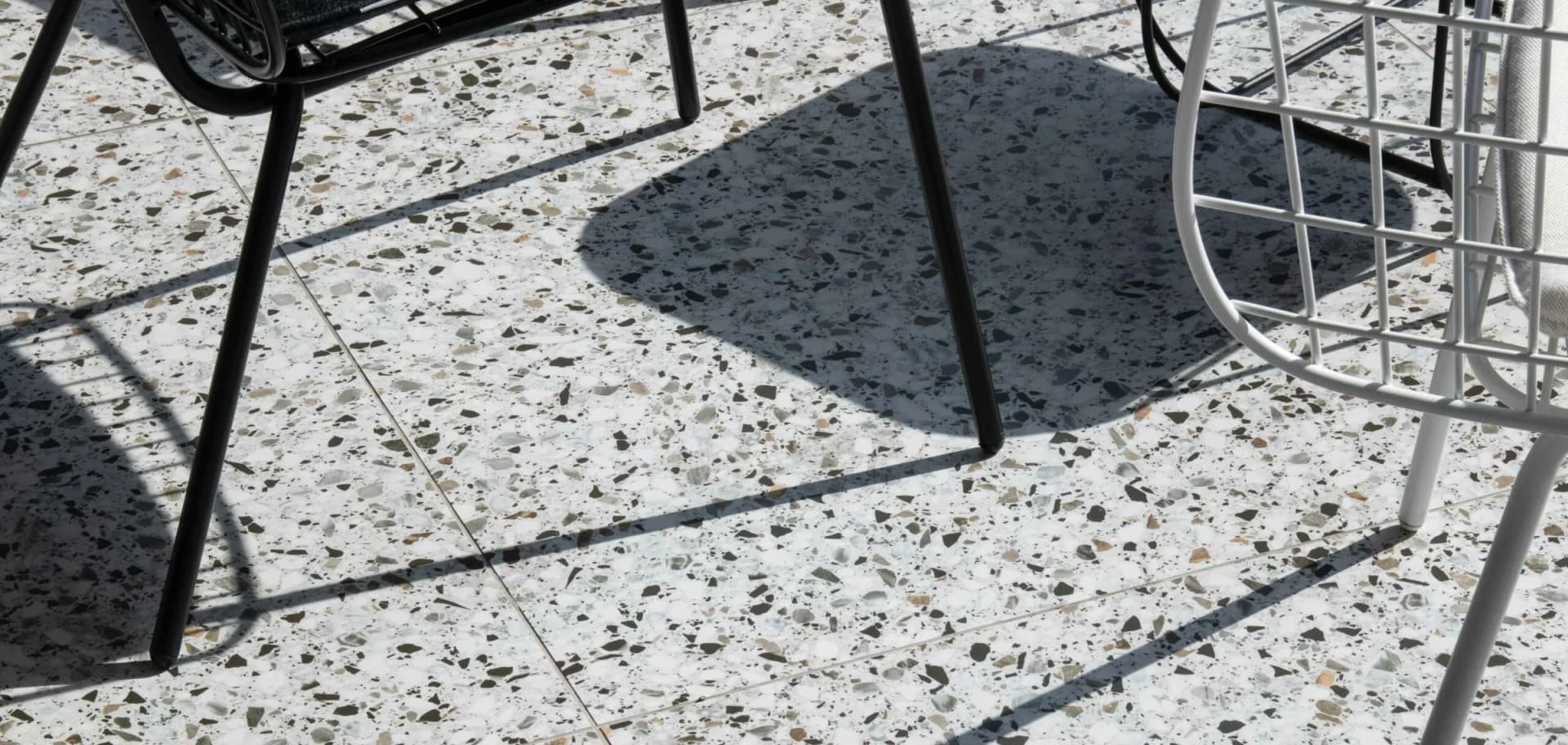
The two tiles are worth specifying together, because the contrast is legible and useful. A lobby in polished terrazzo running out to a washed terrazzo terrace keeps one aggregate, one base colour and one visual family across the threshold, while the surface changes exactly where the conditions change.
The eye reads them as the same floor in two states. A polished face reflects and shows the aggregate cleanly under a raking light; a washed face scatters that light and looks slightly darker and denser for the same code. Ask for both samples side by side before deciding, because a photograph flattens the difference to nothing.
Maintenance, and how it differs
A washed surface is more forgiving day to day and slightly more work to clean. It does not show scuffs and fine scratches the way a polish does, so it ages quietly. Grit settles down into the texture instead of skating across it, which means the floor wants a brush and a hose, or a stiff broom, rather than a flat mop.
Both surfaces take a penetrating sealer rather than a film. A film sitting on top of exposed aggregate would fill the relief and undo the reason for the tile. Cleaners stay neutral pH either way, because acid and bleach etch marble whether it is polished or washed.
The one thing a washed floor cannot do is take a regrind and come back the same, since grinding it flat turns it into a polished floor. Damage is dealt with by replacing tiles from the same code, which is a good reason to hold a few spares from the original batch on site.
- Clean
- Neutral pH, brush or hose
- Reseal
- Periodic, traffic led
- Spares
- Hold from the batch
The same codes, the same aggregates
Washed terrazzo draws on the base and aggregate palette already coded for polished terrazzo, so the specification conversation is the same one: name the base, name the aggregate, name the grade. A white base with Greece white chips, or a grey base with black chips, behaves as the polished plate suggests, read a shade deeper.
A coarser grade gives more relief and more grip, so the same recipe at grade 3 has noticeably more texture than at 1.5. For a ramp, start at the coarse end. For a terrace people will cross barefoot, come down to a middle grade and take a sample before you commit it.
- Chip grades
- 1.5, 1.75, 2, 3
- Reference
- Polished library, 38 codes
What a specifier asks about this material
- Is washed terrazzo the same tile as polished terrazzo?
- It is the same mix and the same hand pour, finished differently. Both are marble aggregate through a pigmented cement matrix, cast at the Karachi works. The polished tile is ground and honed until the aggregate is flush with the matrix; the washed tile has the matrix washed back so the aggregate stands proud. Specify either from the same base colours and chip grades.
- Can washed terrazzo be cast on site instead of laid as tile?
- Yes, and on a wall it is often the better answer. Our own team applies the same mix in place and washes the face back before it cures, which leaves one continuous surface with no joint grid, and it will follow a curve or a return that tiles would have to be cut around. It needs a sound prepared substrate, protection while it cures, and an approved sample panel made on the actual wall. Specify tile where the area is simple and spares matter, and cast in place where the joint would spoil the surface.
- Can washed and polished terrazzo be laid in the same floor?
- Yes, and it is one of the better uses of the pair. Keep the same base colour and aggregate, and change surface where the conditions change: polished inside, washed on the ramp, the terrace or the wet threshold. Set the change on a line the building already has, a doorway or a level change, and set the joint out from the drawing so the transition is a decision rather than an accident.
- How is a washed terrazzo floor cleaned?
- With a stiff brush or broom and water, or a hose where the floor is external and drains. A flat mop skates over the relief and leaves grit sitting in it. Use a neutral pH cleaner, and keep acidic cleaners, bleach and abrasive pads off it, because they etch the marble aggregate. It takes a penetrating sealer, never a surface film, which would fill the texture the tile exists for.
- Do you publish a slip resistance rating?
- No, and we would rather explain why than quote a number we cannot stand behind. A slip rating is measured on a tested assembly with a stated method, not on a material in the abstract, and the same tile performs differently wet, sealed, dirty or on a slope. What we can tell you is the process: the aggregate is exposed and left proud specifically for grip. Ask for a sample, wet it, and stand on it.
Materials laid alongside this one

Name the codes you need
Send the codes, the format and the area you are covering, and we will come back with physical samples and a quote against that quantity.