
Concrete cement (CC) tiles
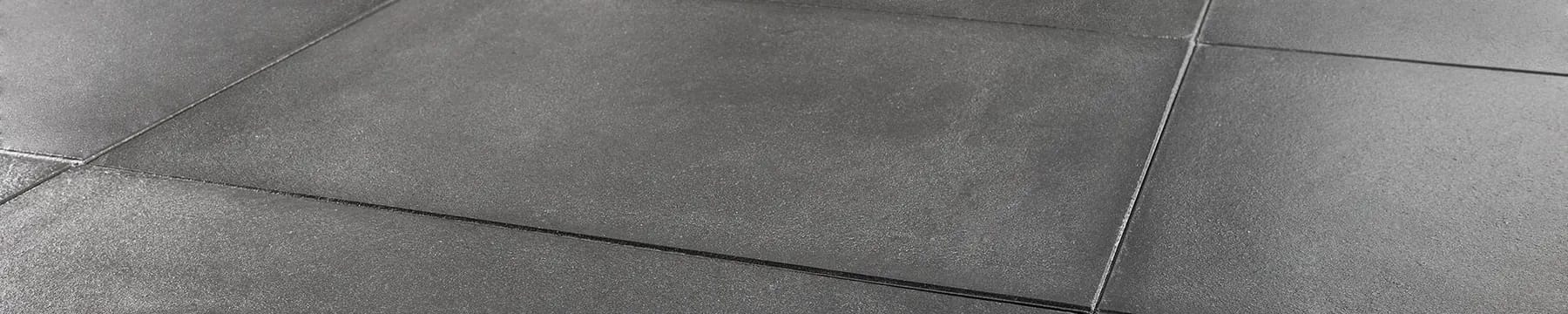
A concrete cement tile is the plain member of the family: pigmented cement, hand poured, matte, with no aggregate showing. The colour goes through the body rather than onto the face, so there is no printed layer to wear off and no glaze to chip. Specify it where the floor should read as one quiet plane and something else in the room does the talking.
Nine pigments held in stock recipes
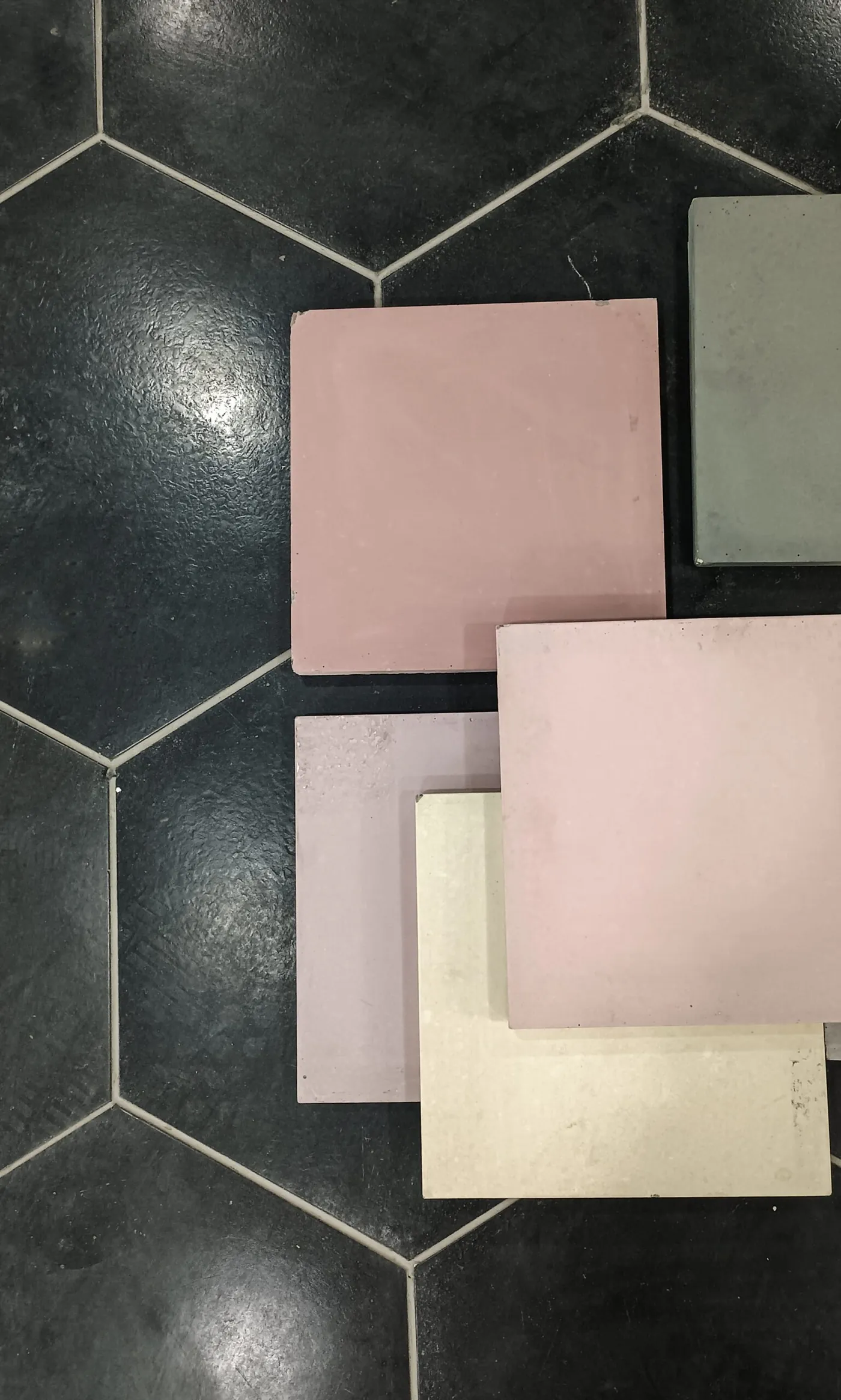
Every colour here is pigment mixed through the body before the pour, so what you see is the tile all the way down rather than a face on it. These nine are the recipes the yard batches regularly. A colour outside them is a mix, not a stock item, and wants a sample before it is committed to a floor.
9 pigments in this library

Light grey
Pigment through the body
Request this sample
Grey
Pigment through the body
Request this sample
Dark grey
Pigment through the body
Request this sample
Terra cotta
Pigment through the body
Request this sample
Yellow
Pigment through the body
Request this sample
Blue
Pigment through the body
Request this sample
Sea green
Pigment through the body
Request this sample
Beige
Pigment through the body
Request this sample
Brown
Pigment through the body
Request this sample
Order a whole floor as one batch, including cuts and spares. Two batches of one pigment come out close rather than identical, and the difference reads as a patch rather than as depth.
Specification
- Colour
- Through the body
- Surface
- Matte, unaggregated
- Pour
- By hand, Karachi works
- Format
- Cast to order
- Batching
- One batch per floor
- Application
- Floor, wall, courtyard
Colour through the body, not on the face
Pigment is mixed into the cement before the tile is poured, so the colour is the material rather than a coat on it. Cut a tile in half and the section is the same charcoal or ochre or grey as the face. That is a different proposition from a printed porcelain, where the pattern is a film under a glaze, or a painted screed, where it is a film on top.
It matters most where traffic concentrates: a doorway, the foot of a stair, the line customers walk. A through-body tile in those places goes a little more matte with wear rather than showing a paler patch of substrate. It is also why a cut edge needs no trim to hide a differently coloured core.
- Pigment
- Mixed before the pour
- Section
- Same colour as the face
- Wear
- No layer to break through
Poured by hand at the works
Every tile is poured by hand in Karachi, into a mould, then cured in stacks before it goes anywhere. Nothing is pressed out of a dry line and nothing is fired. That is slower than an industrial tile, and it is exactly what lets a batch be mixed to a colour instead of picked out of a stock range.
Curing is not a queue, it is part of the specification. A cement tile that leaves before it has cured properly is a cement tile that moves and dusts later. Tiles go out in the order they were poured, and format is a mould question rather than a stock question, so a size outside the usual ones is possible where the area justifies cutting the mould.
- Pour
- By hand, in a mould
- Cure
- In stacks, before dispatch
- Finish
- Matte, unglazed
Consistency, and why one batch matters
Hand poured pigmented cement is mixed in batches, and two batches of one colour will be close rather than identical. Cement is a natural material, the pigment is measured into a wet mix, and the ambient temperature during the cure has a say in the final tone. Within a batch that variation is small and reads as depth. Across batches it can read as a patch.
So order the whole floor at once, including the cuts and a margin of spares, and specify it as a single batch. If the programme forces the job into phases, say so at the quote stage: the batches can be planned and the join set on a threshold or a change of level rather than in the middle of a room.
Keep the spare tiles from the original batch on site once the floor is laid. They are the only exact match that will ever exist for it.
- Order
- Whole floor, one batch
- Spares
- Keep from the same batch
- Phasing
- Declare at quote stage
Where a plain cement tile belongs
Use it where the floor is a ground rather than an event: a gallery or showroom where the work on the wall is the subject, a kitchen or courtyard that wants a flat matte tone, a corridor or stair running between rooms that are doing more. It also works as the field around a patterned panel, or as the calm surface a terrazzo or stone threshold cuts into.
On a wall it behaves the same way and holds a raking light honestly, which is why it suits stairwells and any surface lit from one side. Outdoors it is specified for courtyards and shaded terraces. Where standing water or a real slope is involved, washed terrazzo or a driveway paving unit is the better answer.
The same body, patterned
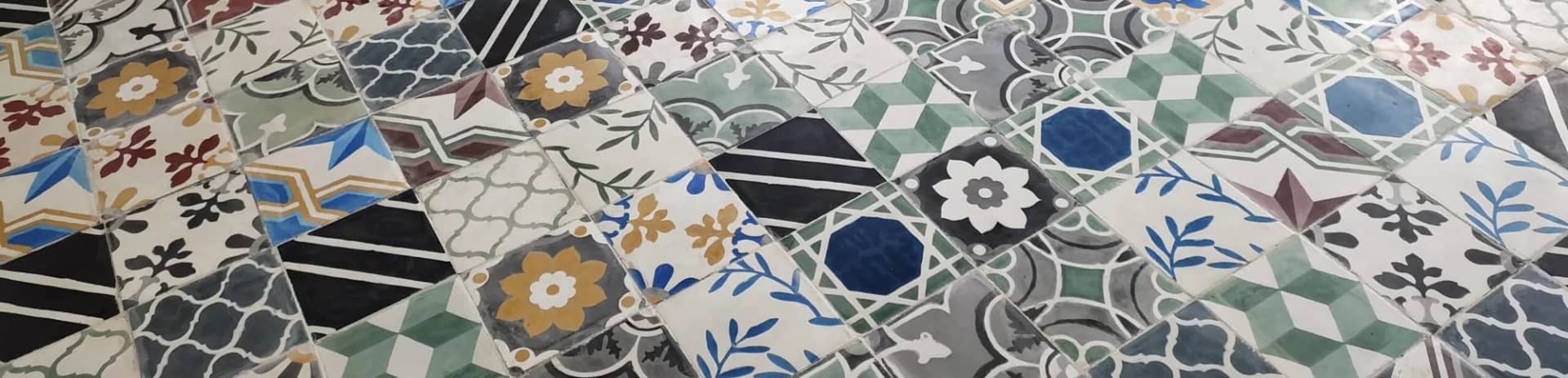
The Moroccan pattern tile is this tile with a patterned wearing layer poured on top of the same structural body. Same works, same hand pour, same pigments, same cure. That relationship is useful when specifying, because a plain cement field and a Moroccan pattern panel come out of the same mixes, so the colours sit together properly instead of nearly matching.
A common layout uses the pattern as a rug or a border and the plain tile as the field around it. Ask for both samples together and lay them side by side before setting the proportion: a pattern reads much stronger across a room than it does on a plate.
What a specifier asks about this material
- Will the colour wear off a cement tile?
- No, because there is no layer to wear off. Pigment is mixed through the body before the tile is poured, so the colour at the surface is the colour all the way down. What does change with traffic is the sheen: a busy line goes slightly more matte over the years, which reads as an evenly worn floor rather than as damage in one spot.
- Why should I order the whole floor in one batch?
- Because the tiles are hand poured, and colour holds tightly within a batch but only closely across batches. Order the area, the cuts and a spare margin together, specified as one batch, and the floor is consistent. If the job has to be phased, tell us at the quote stage so the batches can be planned and you can set the join at a threshold instead of mid-room.
- Is a concrete cement tile the same thing as a Moroccan pattern tile?
- The body is the same. A Moroccan pattern tile adds a patterned wearing layer, poured into a brass divider on top of that body and pressed into it, so it is the same material with a pattern in it. Plain and patterned tiles ordered together share pigments, which is why a pattern panel set into a plain field matches rather than almost matching.
- Does a cement tile need sealing?
- Yes. Cement is porous, so a new floor takes a penetrating sealer before it goes into use, and again periodically depending on traffic. Clean it with a neutral pH cleaner once sealed. Acidic cleaners and bleach attack cement directly, and a strong degreaser will strip the sealer and let the next spill straight in.
Materials laid alongside this one

Name the codes you need
Send the codes, the format and the area you are covering, and we will come back with physical samples and a quote against that quantity.