
Cast concrete 3D wall tiles
A 3D wall tile is a unit of cast concrete with relief in its face. Laid to a repeat the joints stop registering, and what a room reads is one sculpted plane that changes through the day as the light moves across it. Six patterns are in production: Shakl, Mathlath, Khewra, Lehr, Arrow and Koella.
Seven patterns, six in production
Every pattern is cast face down in a mould, so the relief is the mould in reverse and each tile in a run carries the same facets at the same depth. Six are in current production and Kirthar is the seventh in the book. What separates them is the angle the light has to cross.
7 patterns in this library
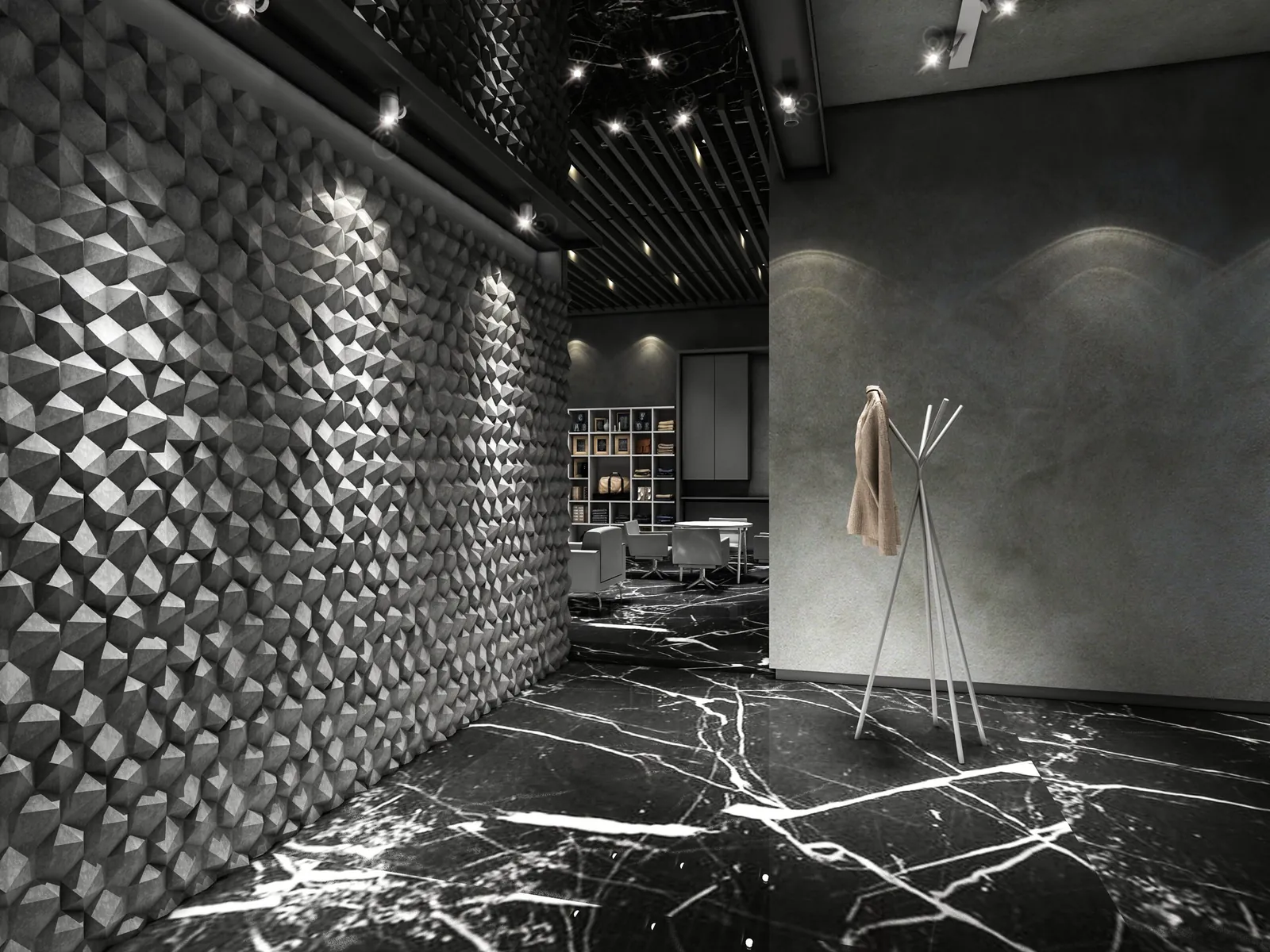
Shakl
Broken triangular facets, no two alike
Request this sample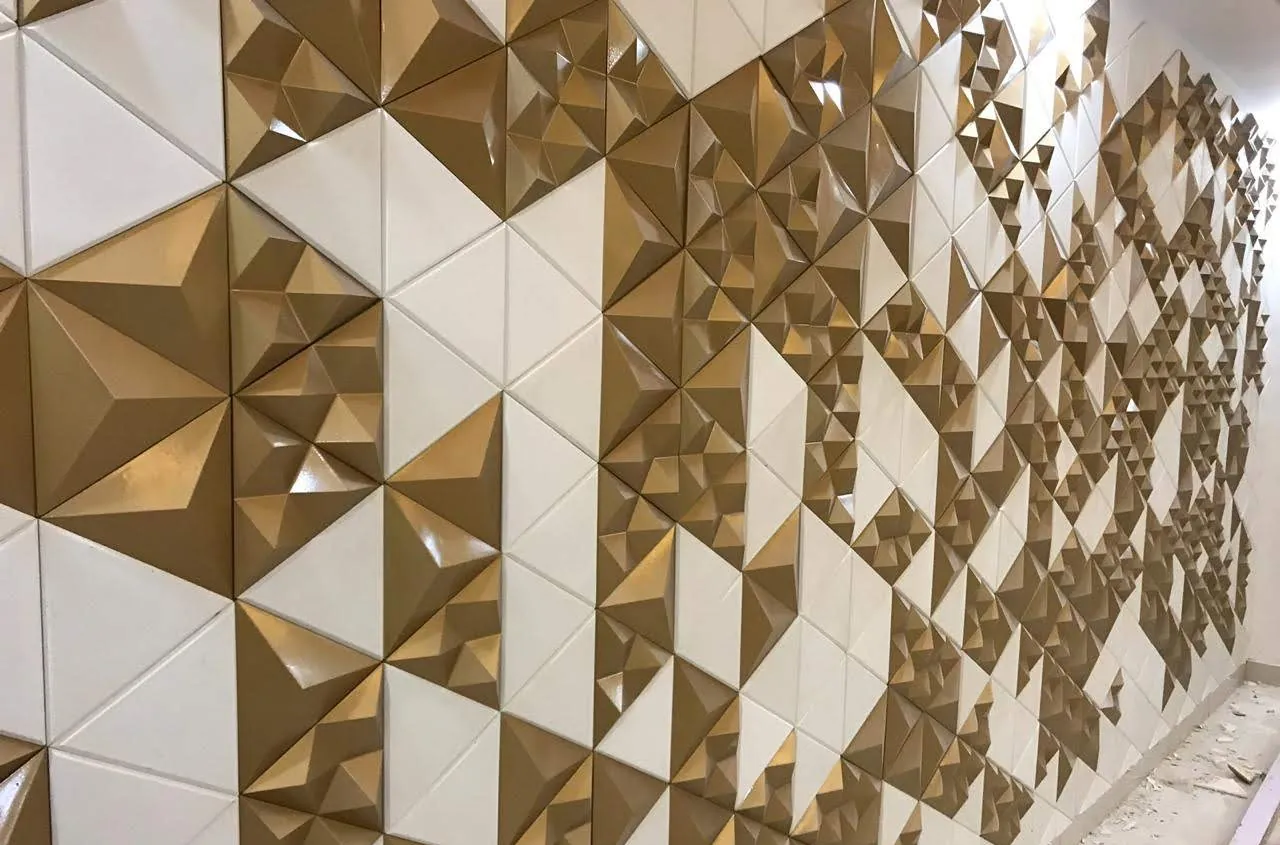
Mathlath
Regular pyramids on a square module
Request this sample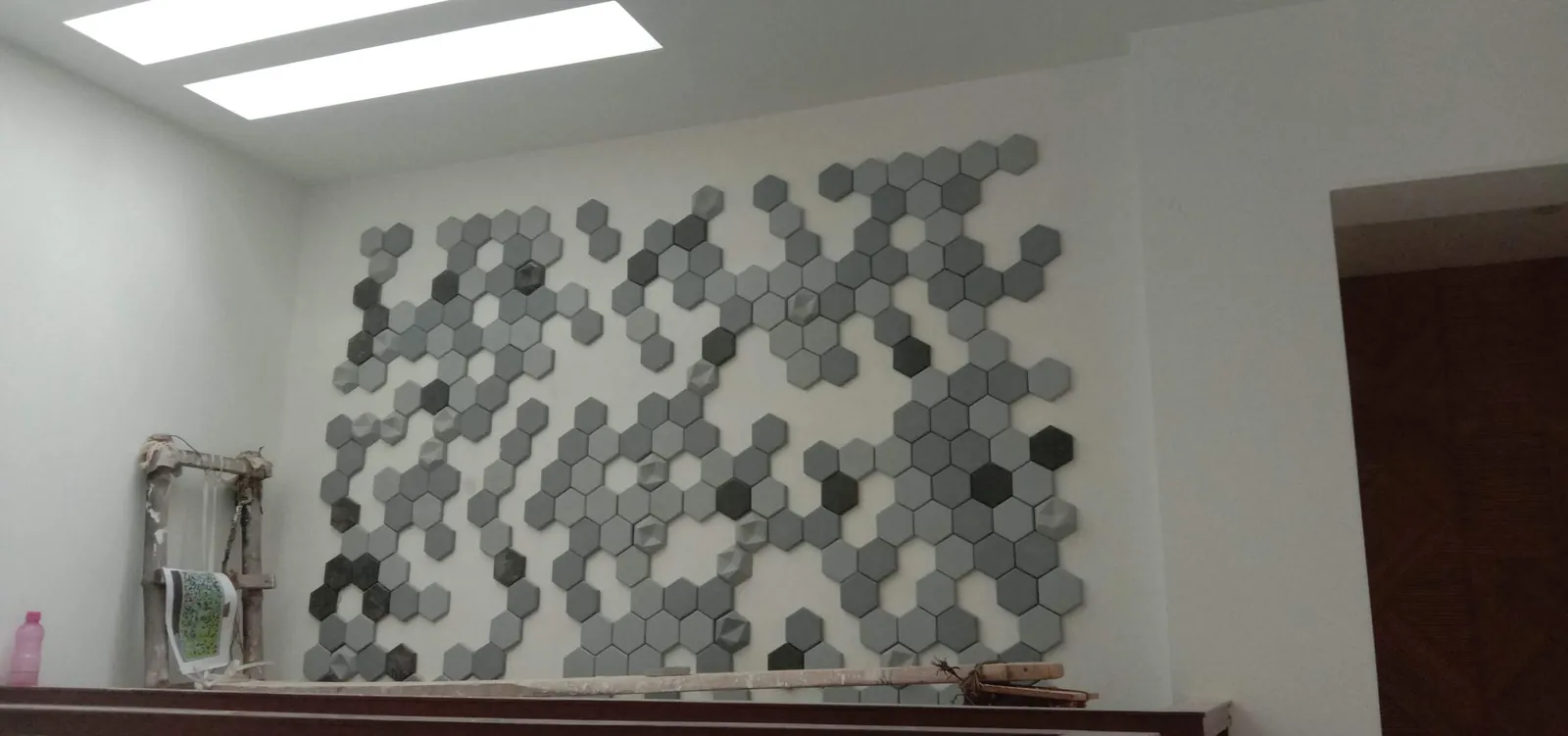
Khewra
Stepped relief on a diagonal
Request this sample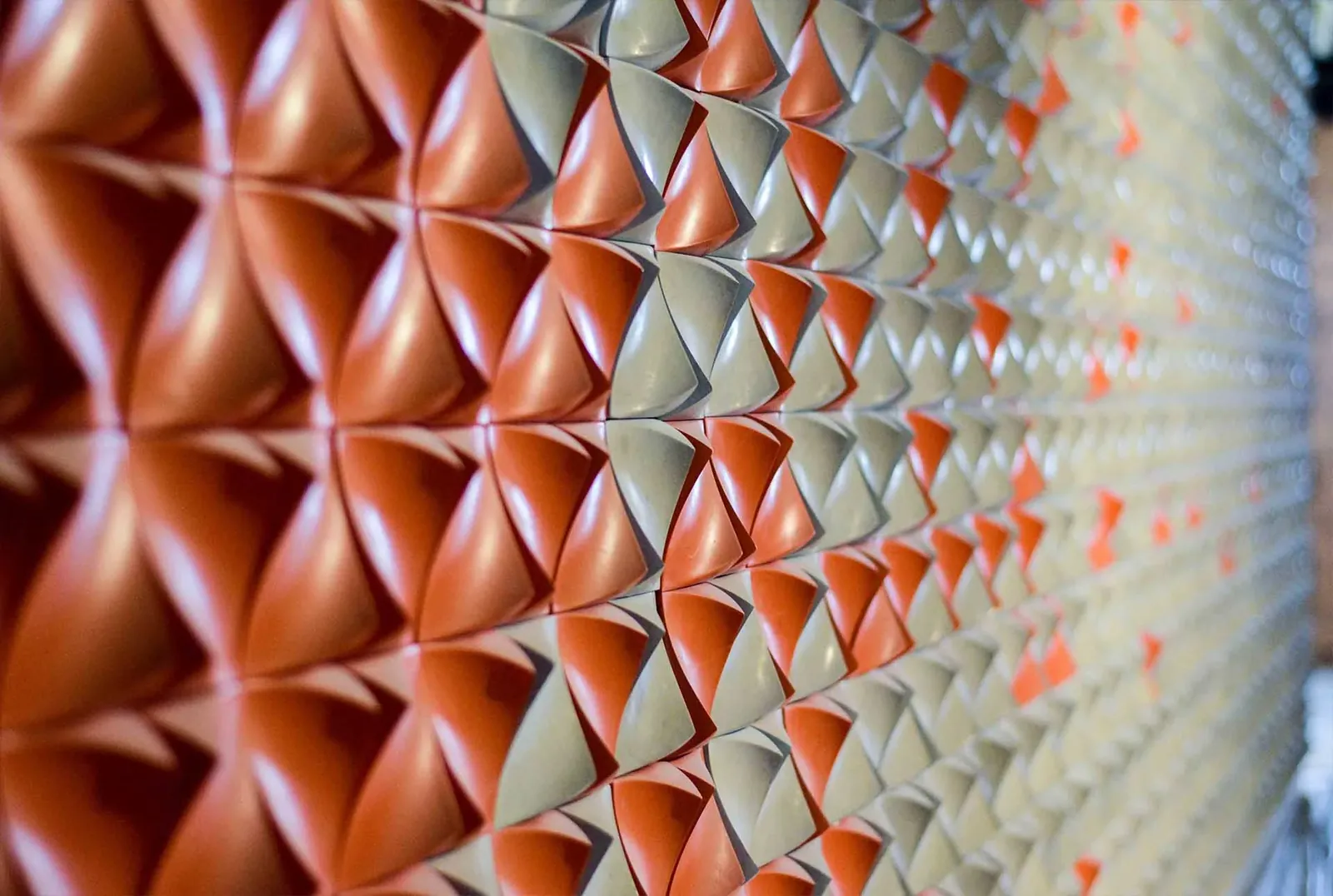
Lehr
Wave running across the joint
Request this sample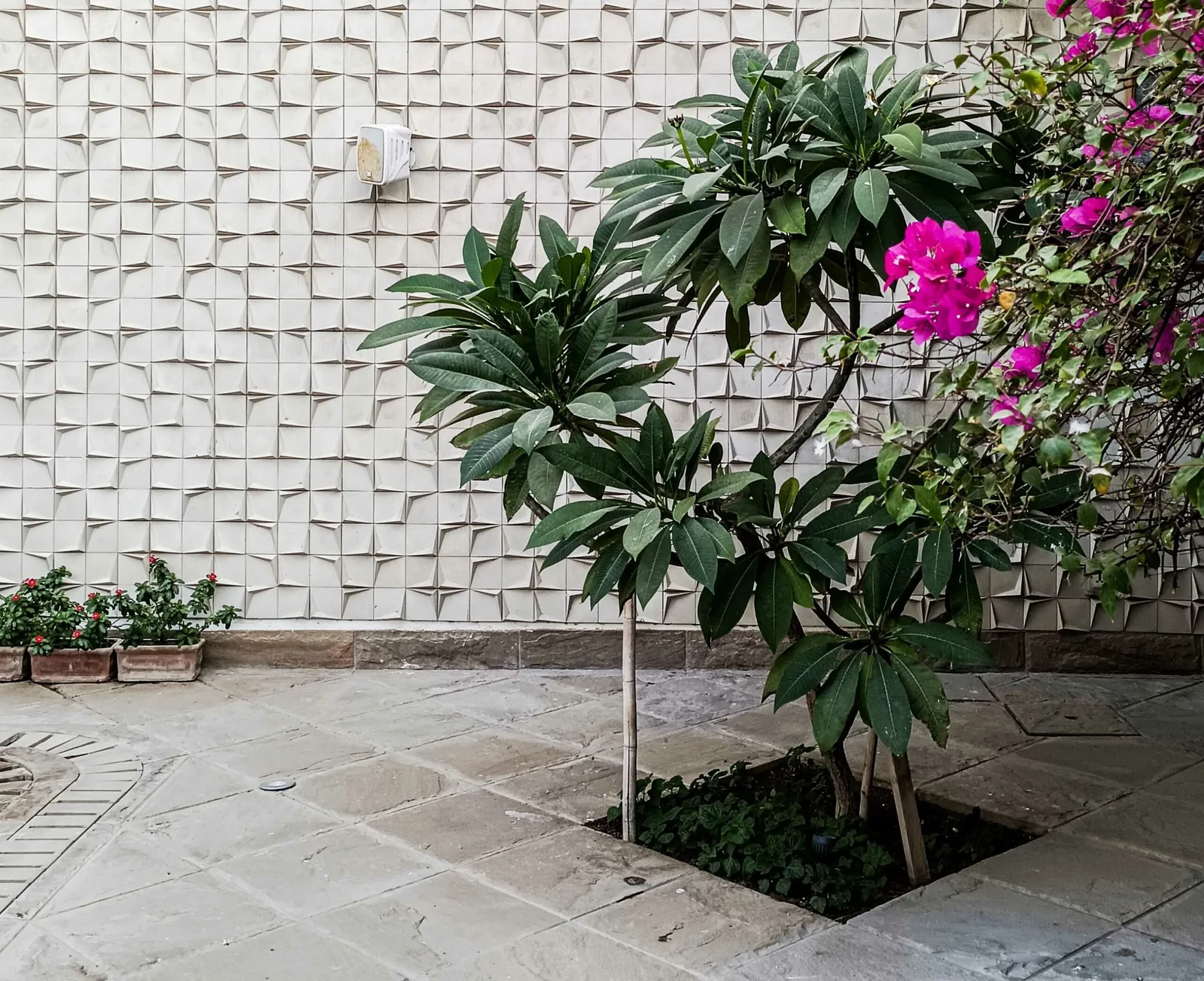
Arrow
Directional chevron
Request this sample
Koella
Shallow dish cut into the face
Request this sample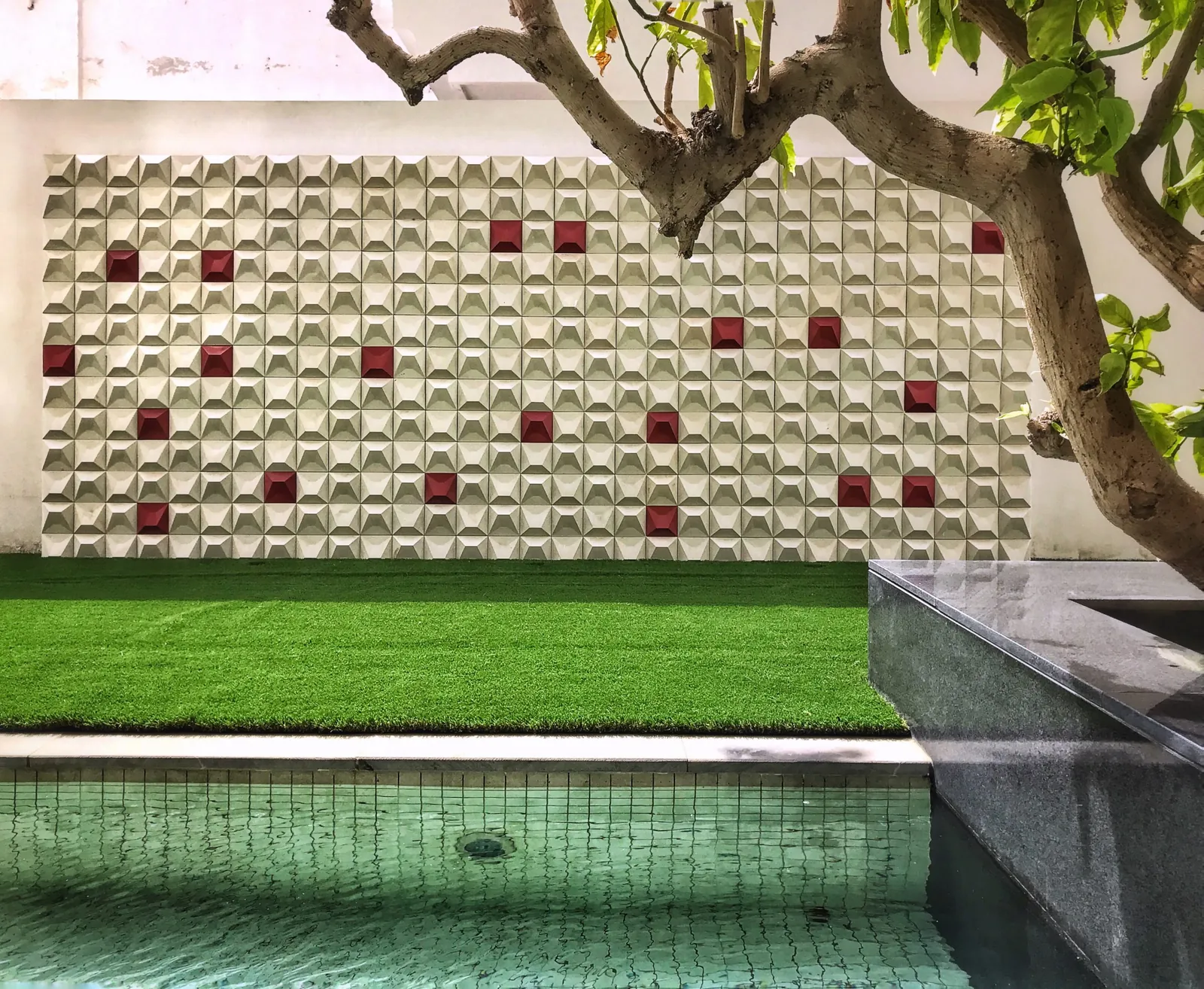
Kirthar
Ridged range, also in the book
Request this sample
Relief is invisible under flat light. Decide the grazing source, tight to the wall, before the pattern is chosen, because that decision changes which of these reads at all.
Specification
- Patterns in production
- 6
- Names
- Shakl, Mathlath, Khewra, Lehr, Arrow, Koella
- Also in the book
- Kirthar
- Material
- Cast concrete
- Use
- Interior and exterior
- Fixing
- Cement based adhesive
How the relief is cast, and the light that reads it
Each unit is cast face down in a mould, so the relief is the mould in reverse and every tile in a run carries the same facets at the same depth. Concrete holds an arris that a pressed board or a vacuum formed panel cannot, which is why the shadow line stays crisp close up and across the room. The tiles cure before they are handled, then they are sorted, because a relief field shows a rocked tile that a flat floor would hide.
Relief is invisible under flat light. A wall of it wants a grazing source: a wall washer tight to the ceiling line, or a slot in a bulkhead set close to the surface, so the light crosses the facets instead of facing them. Move the source out into the room and the wall flattens into a pattern of grey squares. That decision belongs on the lighting drawing, and it is worth making before the pattern is chosen.
- Cast
- Face down in a mould
- Light
- Grazing, close to the wall
- Back
- Flat, for adhesive
Shakl, a field of broken facets
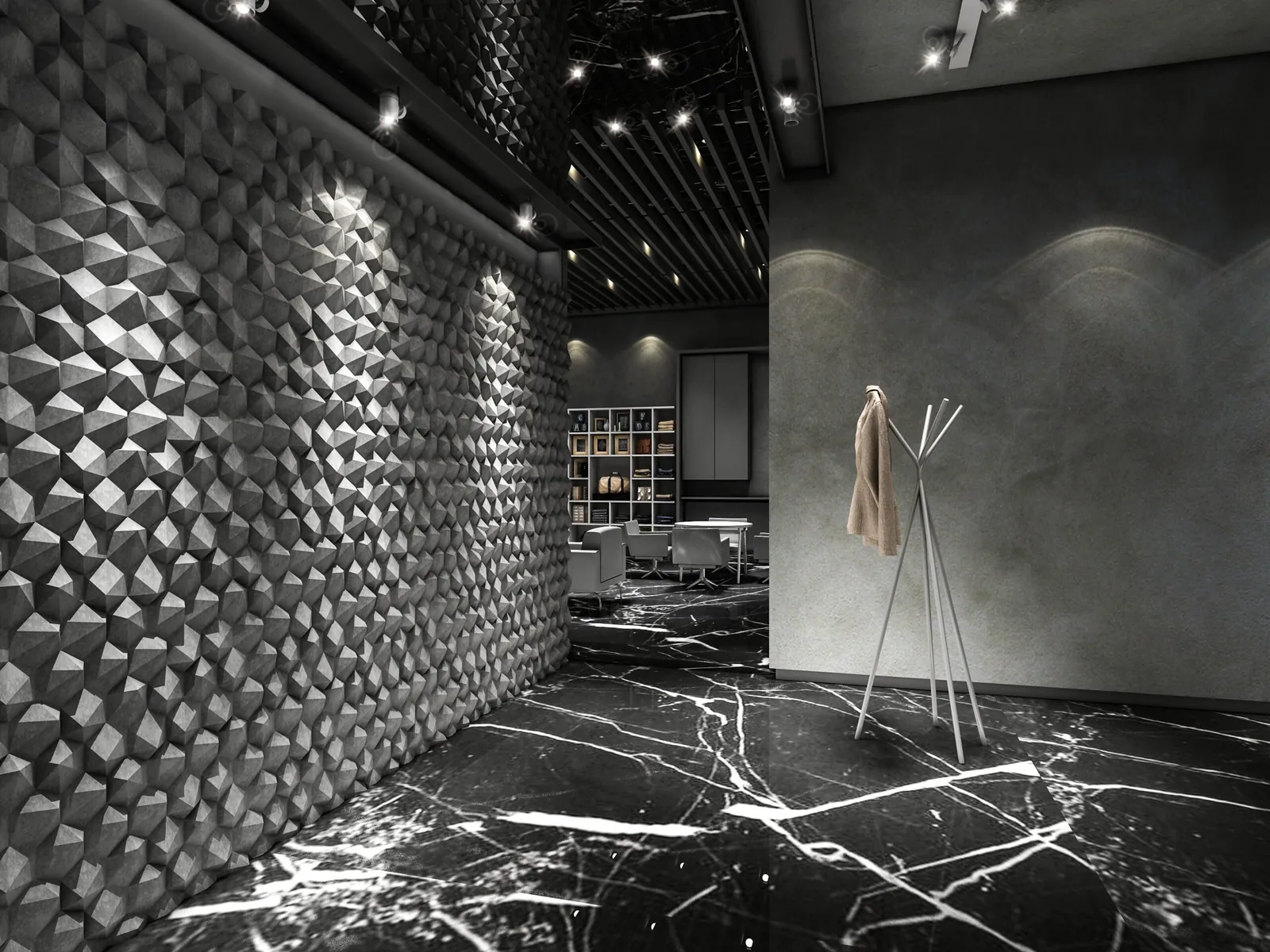
Shakl is form, and it is the least regular of the six. Each face is a cluster of triangular facets meeting at apexes that sit off centre, so no two neighbours catch the light at the same angle and the field reads as a broken crystalline face rather than as a grid. Laid in one dark grey it is the pattern that most rewards a tight downlight, which picks out one facet in three and lets the rest fall away.
Mathlath, triangles in shallow pyramid
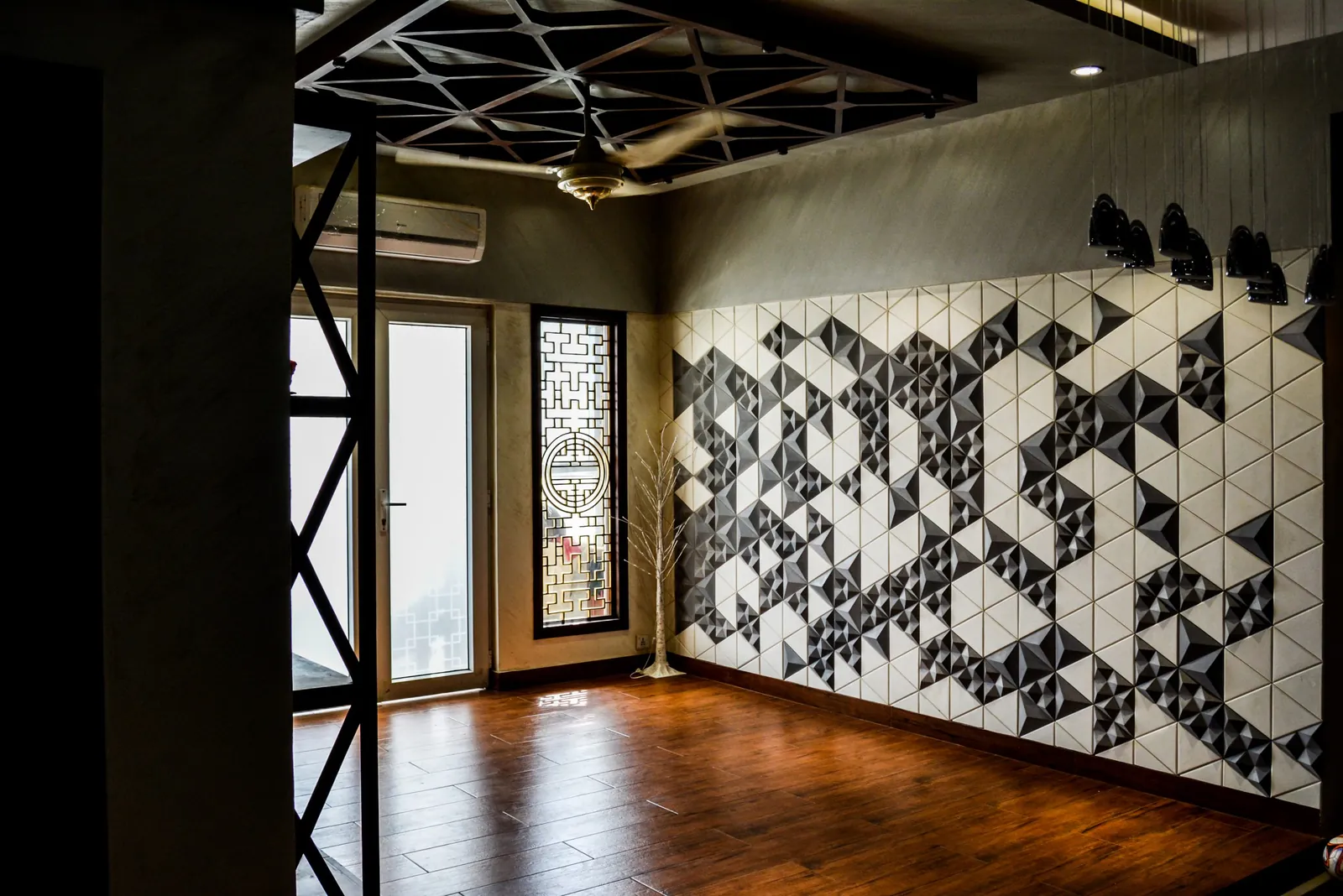
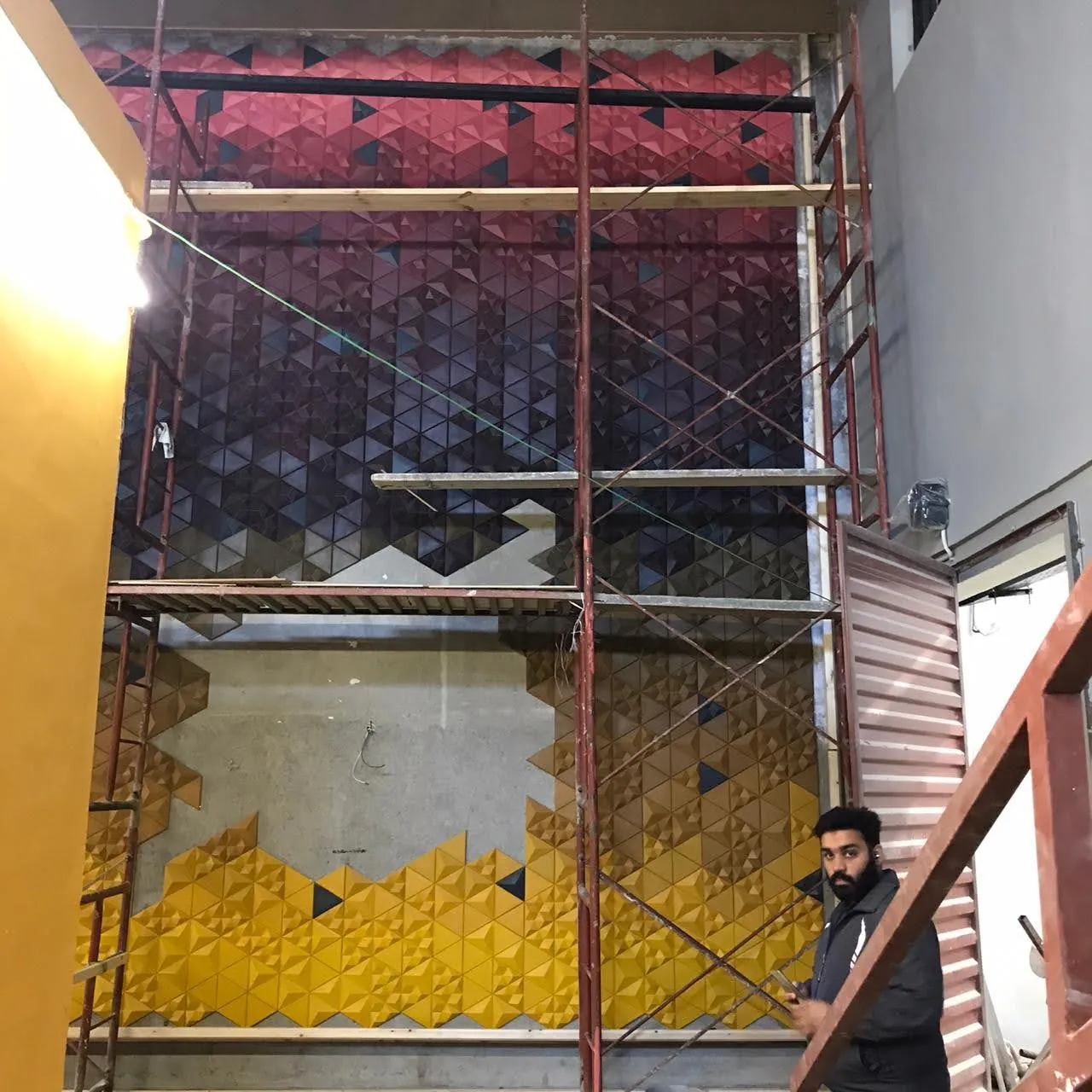
Mathlath is the triangle. Each face is divided into shallow pyramids that share their edges with the neighbouring tile, so the joint disappears and what remains is one continuous triangulated relief. It is the pattern for a large wall that has to stay calm, because the repeat is regular enough that the eye reads the whole surface instead of the individual unit.
At Optium Technologies in Karachi it runs the full height of a stair, banded from ochre through navy to crimson. The colour boundary steps along the tile edges rather than cutting across a face, which is the detail that keeps a banded wall from looking like a wall someone painted.
Khewra, hexagons set as a scattered field
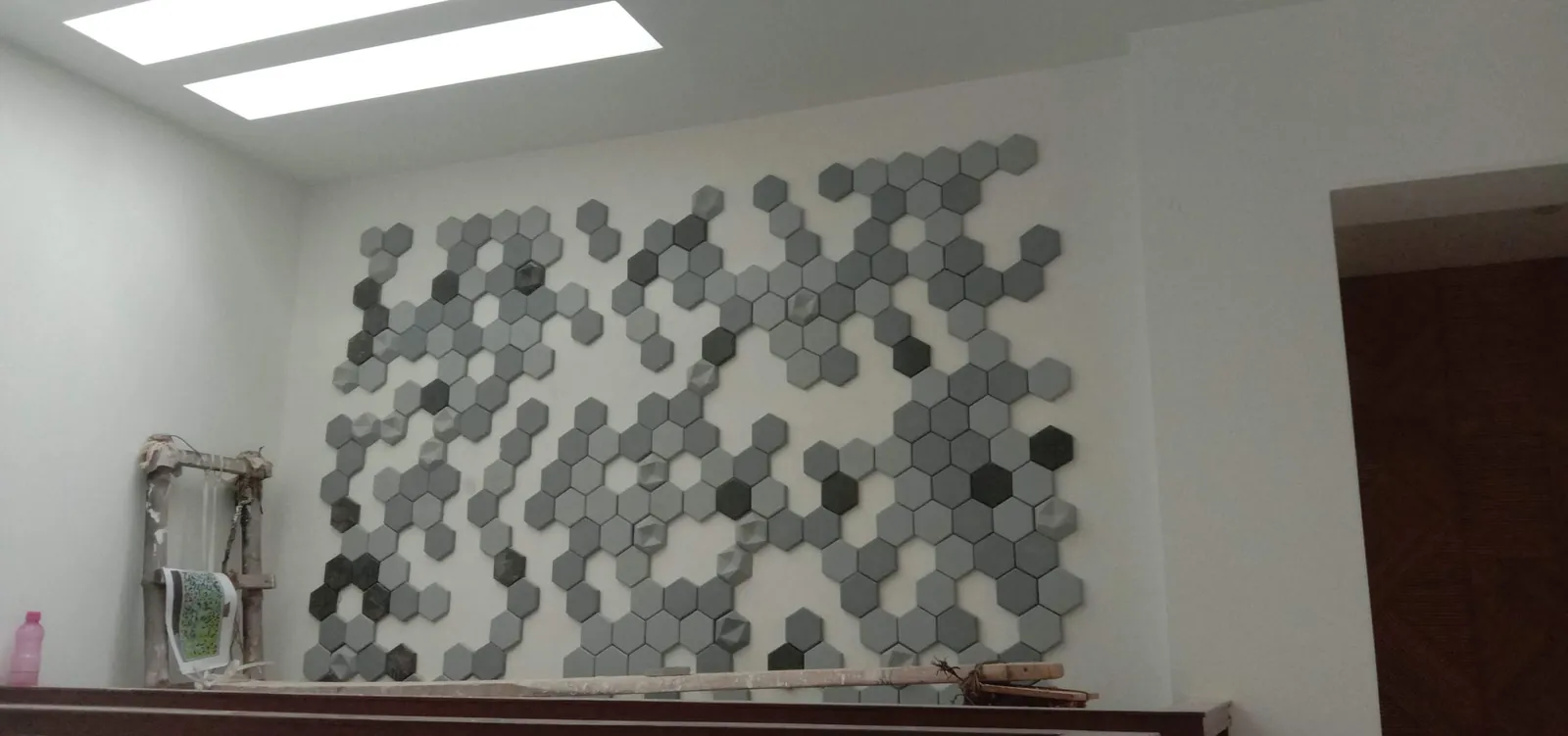
Khewra is a hexagon with a low rise to the centre of each face. The shallow relief is what lets it be used sparsely: in the wall photographed here the hexagons thin out toward the edges of the panel instead of stopping on a straight line, so the field ends without a border and without a cut. Three or four greys mixed through the placement break the honeycomb before it starts to read as a motif.
Set a scattered field out on the wall before any adhesive is mixed. A hexagon has three axes and the eye finds a straight run of one tone immediately, so the placement is a drawing rather than a decision for the installer on the day.
Lehr, a wave held in a cone
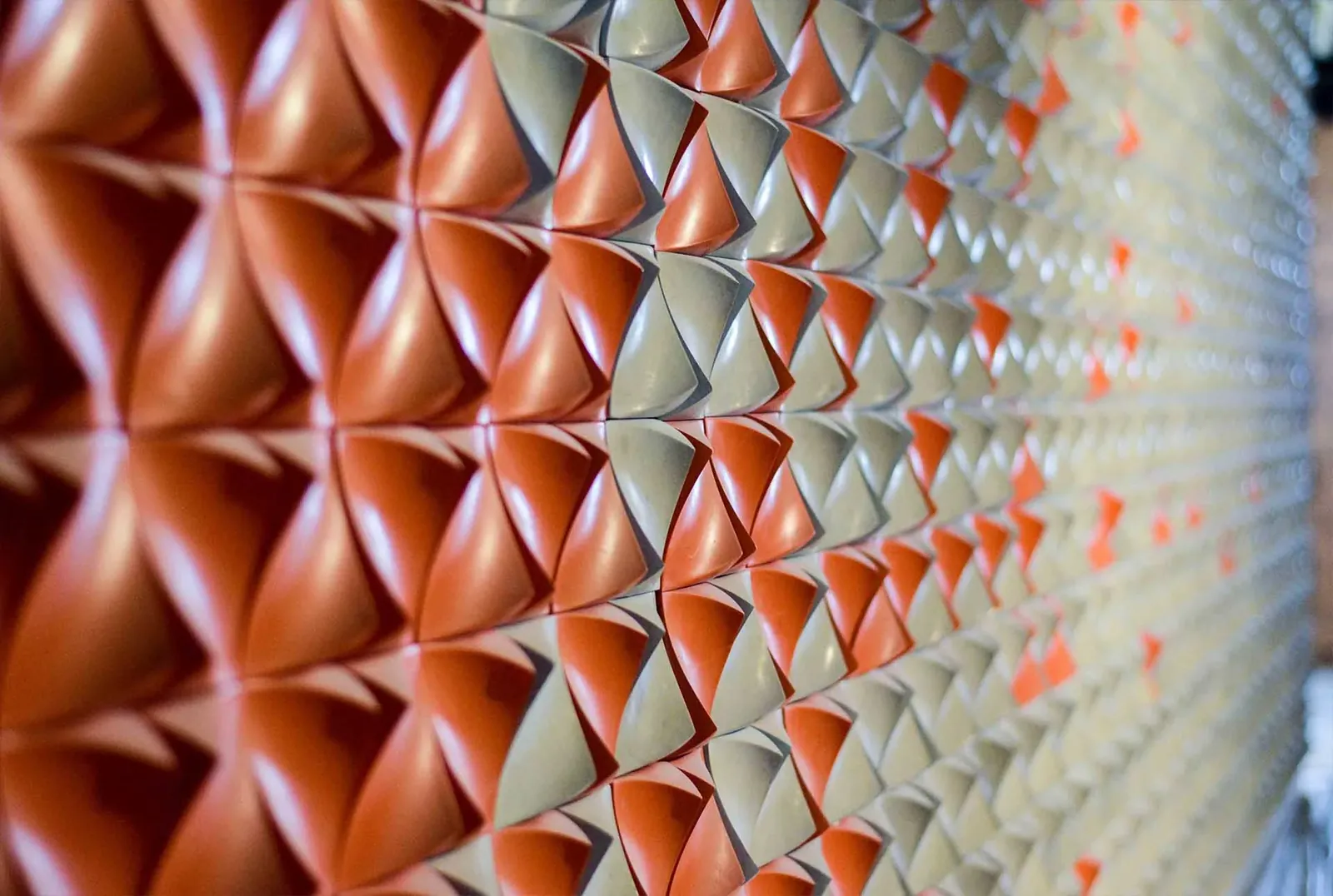
Lehr is the wave, and it is the one pattern in the six with no straight line in its face. Each unit is scooped into a cone, and because the scoops line up across the joints the wall carries long ripples that a raking light turns into alternating bands of bright and shadow. Photographed here in cream against terracotta, it is the pattern that changes most between morning and afternoon.
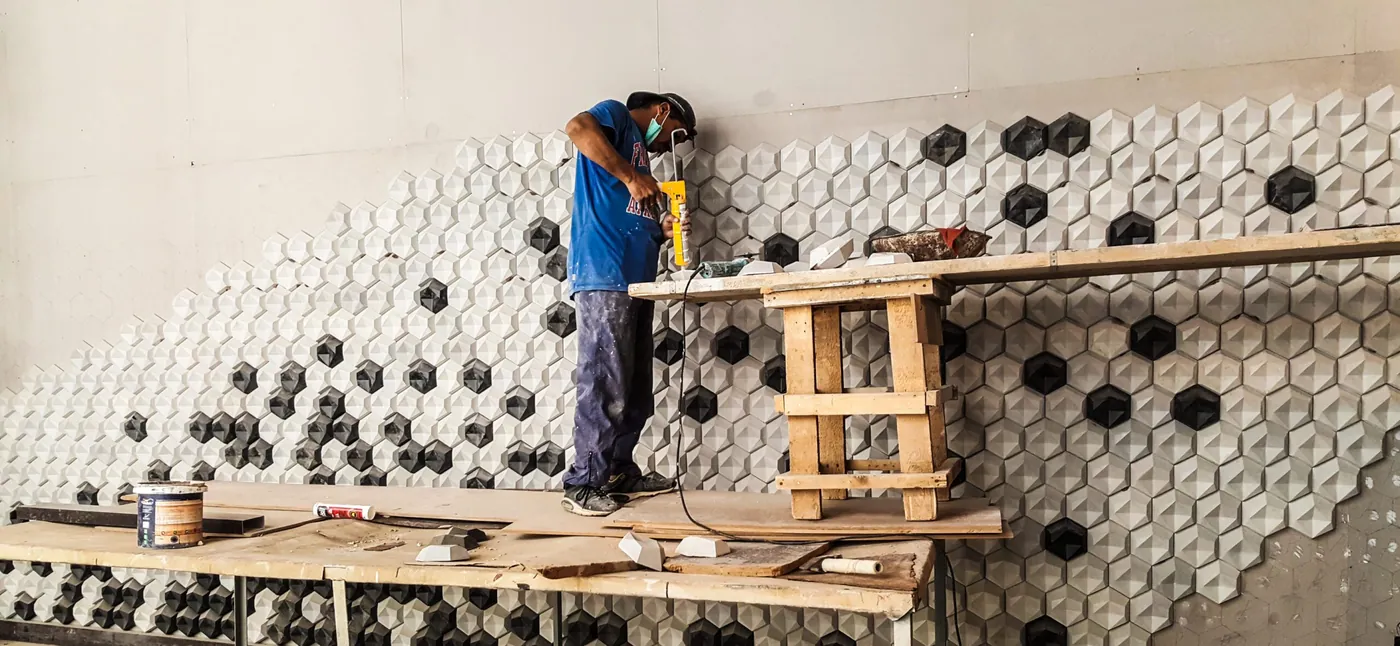
It is also the tile on the Bahria Town Tower wall in Karachi, where the units run from white through grey to black across the field. A graded field of that kind is set out on the drawing and then boxed in order, because it cannot be corrected once the adhesive has gone off.
Arrow, a folded chevron
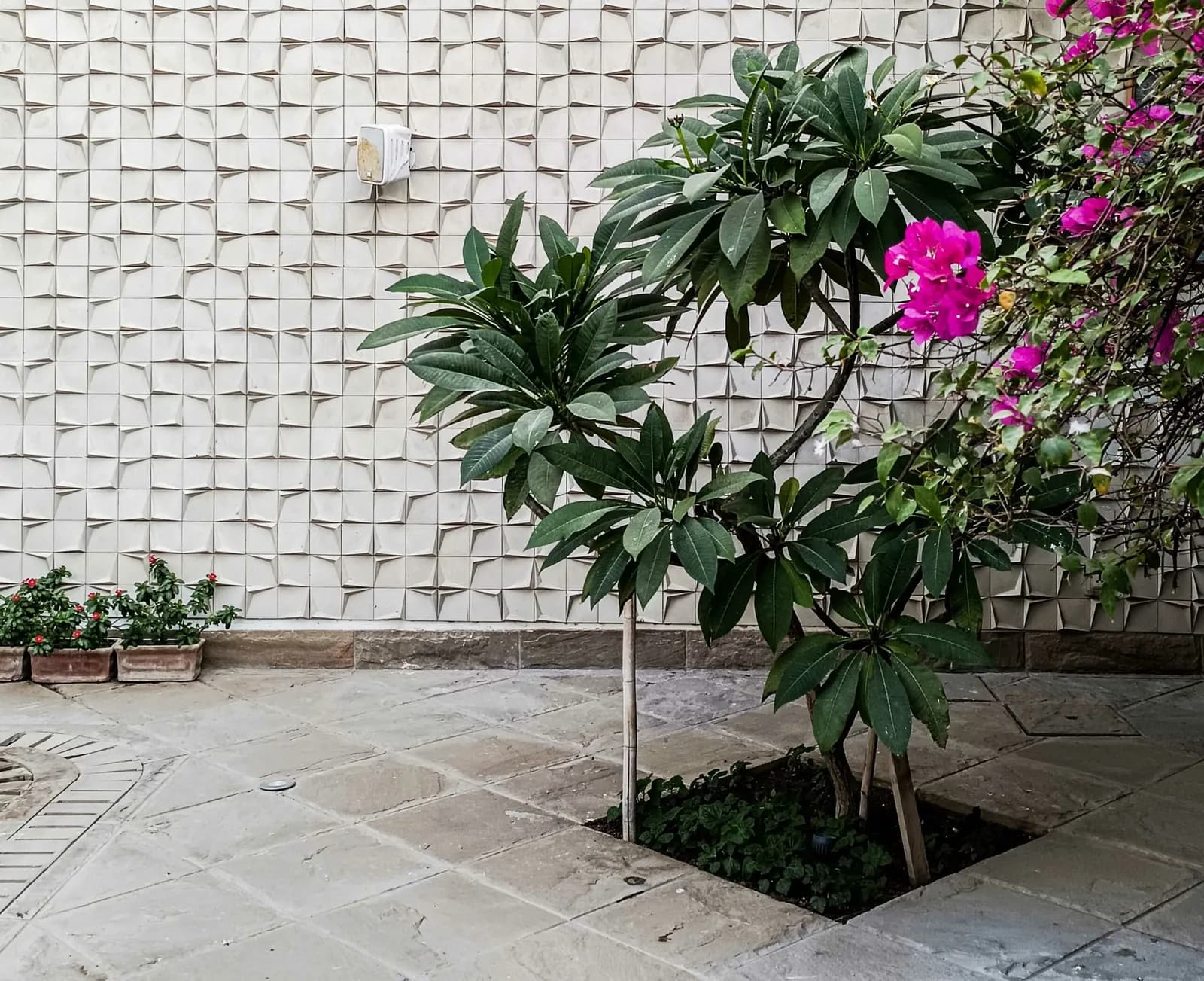
Arrow is the quietest of the six. The face is folded on the diagonal and again to a point, so each tile throws one triangular shadow and the field reads as a soft directional weave rather than as relief. It is what to reach for when a wall has to hold a large area without competing with whatever stands in front of it. In the courtyard photographed here it is laid in white behind a plumeria, where the sun does the work a wall washer does indoors.
Koella, coal at close range
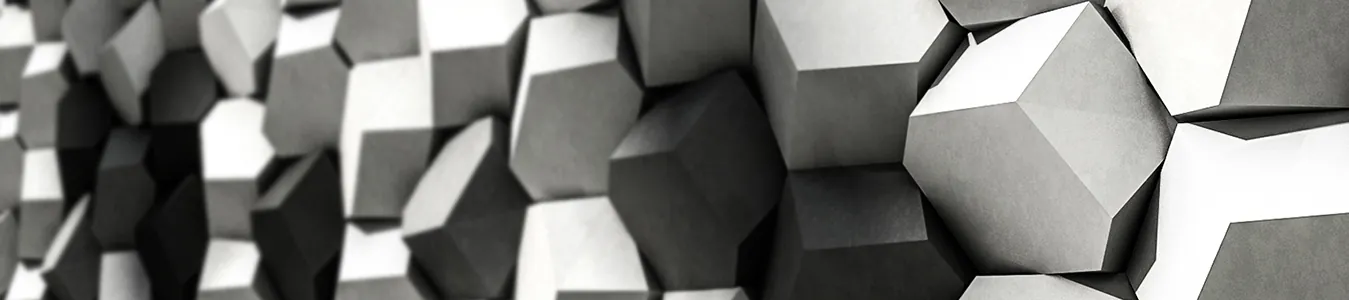
Koella is coal, and the tile is cast to look like it: chunky angular blocks, no two faces at the same angle, standing at visibly different depths off the wall. It is the deepest relief in the range and the most demanding, because the shadows are the whole subject and a flat light kills them. Use it where a viewer passes close, on a lift lobby return, a reception back wall, the flank of a counter. Seen from across a large room it reads as noise.
Substrate, fixing, corners and returns
The tiles are heavy, so the wall behind them has to be sound, flat and cured: plastered blockwork or concrete, with any hollow render cut out before anything is fixed. They are set with a cement based tile adhesive, notched and combed so the whole back is in contact, because a relief tile bridging a void telegraphs the void as a shadow that does not line up with its neighbours. Fix from a datum struck on the wall rather than off the floor or the ceiling, since neither is as true as the pattern will be.
Decide which axis of the repeat runs true and let the cut fall on the other one. Then put the cut where nobody looks: into an internal corner, behind a return, or under a shadow gap at the skirting. A cut through a facet on the most looked at line in the room is the one thing on this page that cannot be talked away afterwards.
External corners are the decision the drawing has to make. Either stop the field short and turn the corner in a flat material with a shadow gap between them, or mitre both edges and accept that the relief will not resolve across the arris, because the facets arrive at the corner at different depths. Both are honest, and both beat a special cut on site.
- Substrate
- Plastered blockwork or concrete
- Fixing
- Cement based adhesive, fully combed
- Set out from
- A datum on the wall
Inside, outside, and the seventh pattern
The unit is concrete, so the same tile goes indoors and out. Outside it takes a movement joint wherever the substrate has one, and it will gather a patina in Karachi air, which the deeper patterns carry better than the shallow ones because their shadows are already doing that work. Inside, the only real constraint is the light.
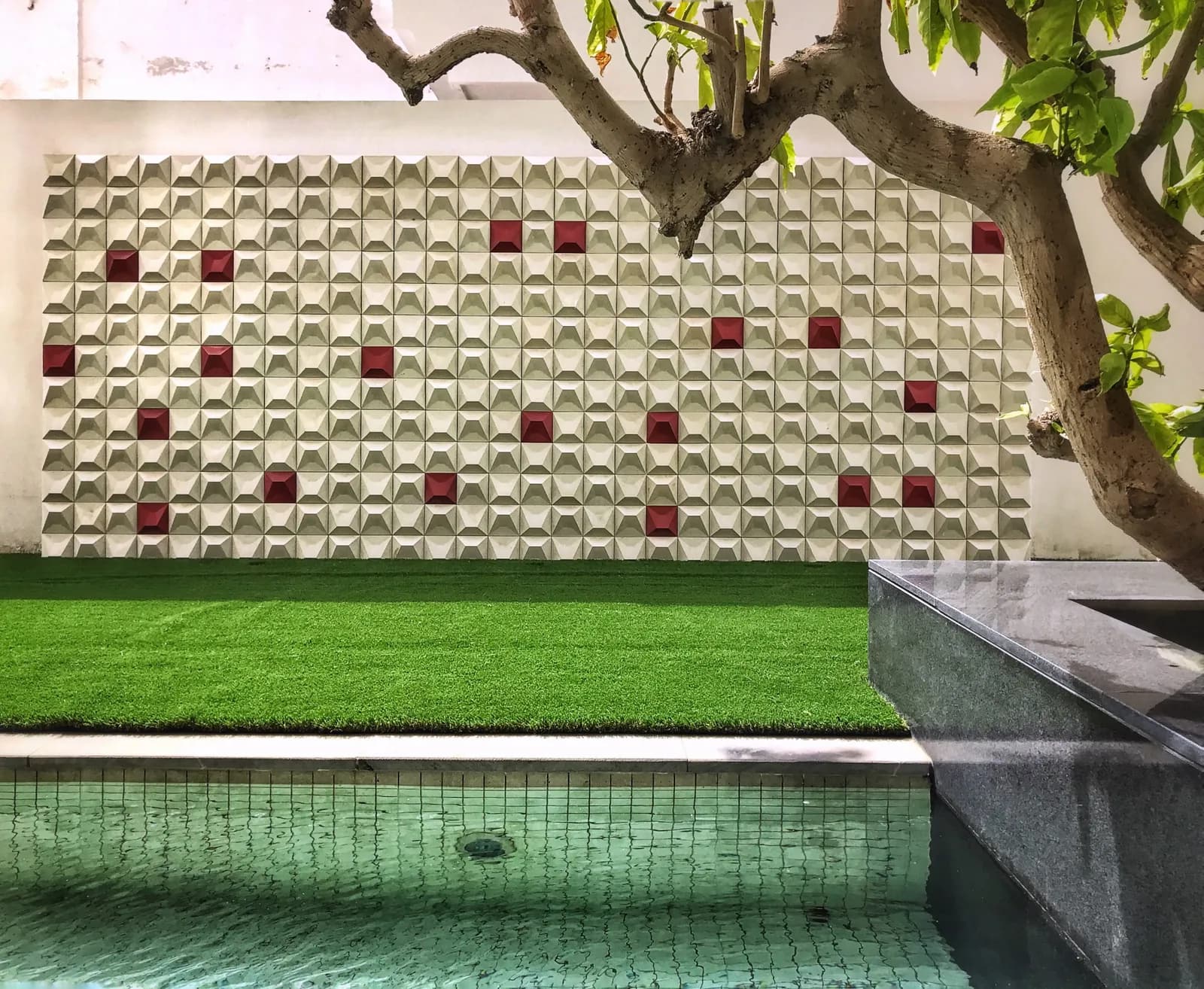
Kirthar is a seventh pattern in the book rather than one of the six in production, which means asking for it before it goes on a drawing. Each square rises to a low central pyramid split into four facets, so the field reads as a grid of soft stars. On the poolside wall photographed here it is laid in cream with single deep red units scattered through it, which is the least invasive way to put colour on a wall of this kind: a handful of units, placed on the drawing.
- Interior
- Any pattern, grazing light
- Exterior
- Movement joints, expect a patina
- Kirthar
- In the book, not in production
What a specifier asks about this material
- How should a 3D wall tile be lit?
- Graze it. Put the source close to the surface so the light travels across the facets: a wall washer at the ceiling line, a slot in a bulkhead, or an uplight at the skirting for a short wall. A downlight sitting well out in the room faces the tile instead of crossing it, and the relief disappears. Test it with a torch against a sample board before the lighting layout is issued.
- Which pattern suits a large wall?
- Arrow and Khewra hold area quietly, because the relief is shallow and the repeat does not ask for attention. Mathlath scales to full height, which is why it works on a stair. Koella and Shakl are close range patterns that earn their depth on a short wall someone walks past, and read as noise across a large room. Lehr sits between the two and depends entirely on how the light crosses it.
- Can these tiles go on an exterior wall?
- Yes, the range is made for interior and exterior use. Outside, carry any movement joint in the substrate through the tile field, fix with an adhesive rated for external exposure, and expect the surface to weather, because concrete takes a patina in Karachi air and takes it unevenly on a relief. Send the elevation and the orientation with the enquiry and we will set the fixing specification against it.
- What happens at an external corner?
- One of two details, decided on the drawing. Stop the field short of the arris and turn the corner in a flat material with a shadow gap between them, which is the cleaner solution. Or mitre both edges and accept that the facets will not resolve across the corner, since they arrive at it from different depths. Leaving it to the day produces a cut facet on the most visible line in the room.
Materials laid alongside this one
Name the codes you need
Send the codes, the format and the area you are covering, and we will come back with physical samples and a quote against that quantity.