
Basalt slabs and tiles
Basalt is a volcanic stone: dark, dense and near non-porous, with a grain so fine and so even that a laid floor reads as one unbroken dark plane. AFINISHES manufactures concrete tile and supplies natural stone, so basalt is selected, finished and cut to size in Karachi against your drawing. Specify it where water, weather and traffic are the problem and pattern is not the point.
Three finishes on one stone
Basalt is a dense dark volcanic stone, and the finish is what decides where it can go. Honed reads almost black and flat, flamed opens the surface into a coarse grip, and bush hammering takes it further again. Same slab, three different floors.
3 finishes in this library
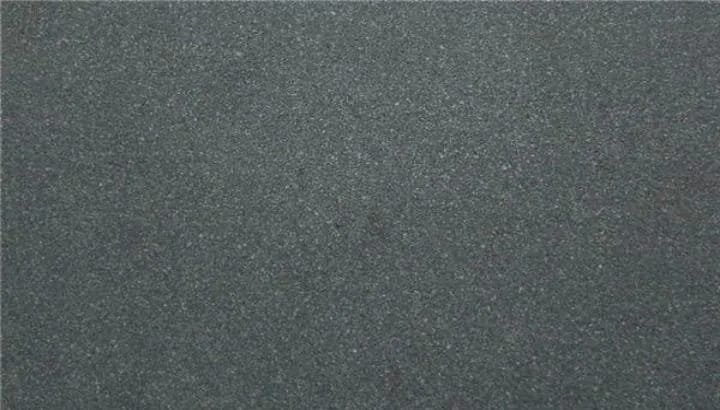
Honed
Flat, near black
Request this sample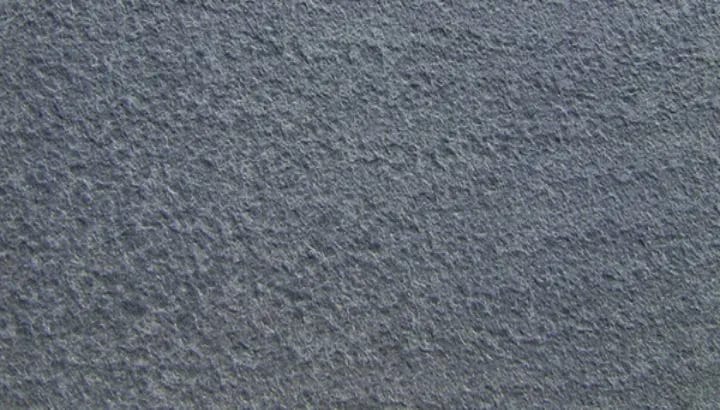
Flamed antique
Opened by heat, grippy
Request this sample
Bush hammered
Peened, coarsest grip
Request this sample
A finish changes the colour as well as the texture. Ask for all three in the same batch before choosing, because a flamed sample looks two tones lighter than a honed one cut beside it.

Specification
- Format
- Slab and tile
- Supply
- Supplied and cut in Karachi
- Character
- Dark, dense, near non-porous
- Grain
- Fine and even, no veining
- Finish
- Honed, brushed, flamed
- Wet and external
- Brushed or flamed for grip
- Best use
- External step, pool surround, feature floor
Why a dense volcanic stone behaves differently
Marble and limestone are calcium carbonate, settled in beds, absorbent, and vulnerable to anything acidic. Basalt is none of those things. It cooled from lava, and cooling fast locks the minerals into a tight interlocking grain with very little pore space left between them. The note on the AFINISHES material sheet is the short version: dark, dense, and near non-porous.
That changes what the stone can be asked to do. Water sits on basalt rather than soaking into it, so a wet room, a pool surround, an external step or a terrace under a monsoon downpour does not carry the staining risk a soft calcareous stone does. Acidic cleaners do not etch it the way they etch marble, which makes the maintenance instruction you hand over shorter and much harder to get wrong.
Near non-porous is not the same as sealed, and the distinction is worth keeping straight. A penetrating sealer is still worth applying to a dark basalt floor, less to keep water out than to make oil marks and hard water spotting easier to lift later.
For a sense of how hard the stone is, the silbatta is useful background: the flat grinding stone worked in kitchens across Pakistan is cut from dense volcanic rock for the same reason a specifier reaches for basalt, because it does not give its surface up. That is context on the material, not a product line. What AFINISHES supplies is slab and tile.
The fine grain and what a dark ground does to light
Basalt has almost no figure. The grain is fine, even and consistent across a slab, so the stone does not hand you a pattern to set out, it hands you a field. Laid across a large area it reads as a single dark plane, and every reveal, edge and shadow line in the room sits against it with nothing competing for attention.
That is the appeal, and it comes with a consequence to design for rather than discover on site. A dark floor absorbs most of the light reaching it instead of returning it to the room, so the same window that felt generous over a cream limestone will feel thin over basalt. Plan the light budget accordingly: a lighter ceiling and walls, more glazing where it is available, and artificial light in layers at low level with warmer lamps so the grey does not read cold.
In a small room with one window, a full basalt floor is a decision to take deliberately rather than by default. In a courtyard, on a terrace, around water, or in a large volume with plenty of sky, the same darkness is exactly what makes the light, the planting and the reflections read.
Honed, brushed and flamed
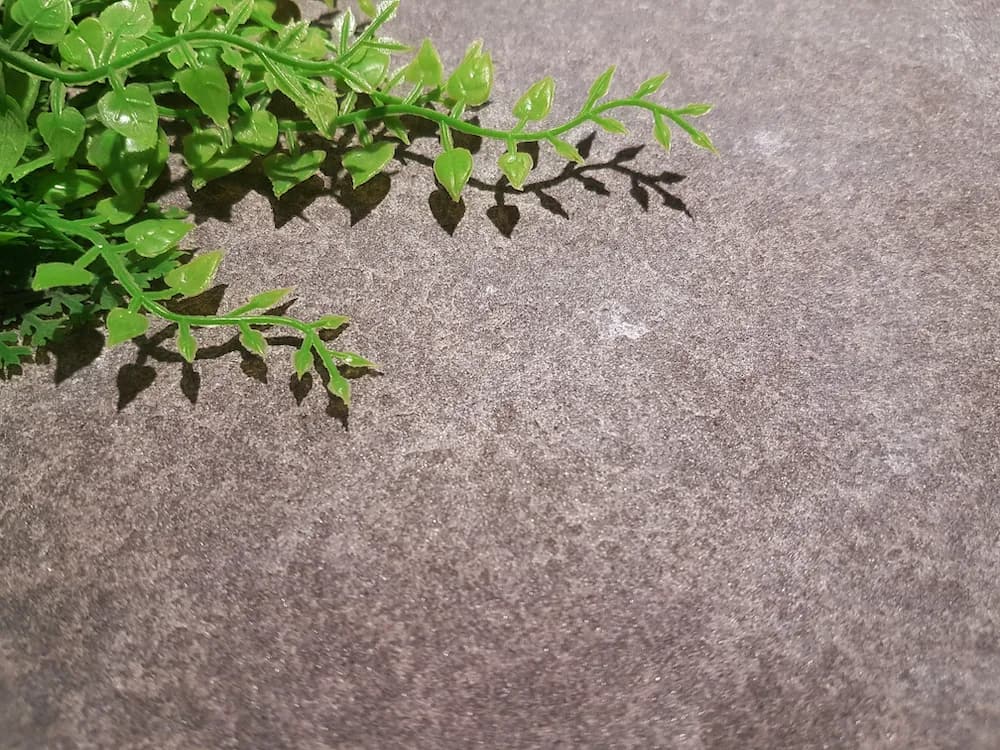
Basalt is finished three ways, and the choice is mostly about grip and about how much the surface shows. Honed is ground flat and matt: the calmest of the three, the darkest, and the one for an interior floor or a wall where nothing is walked on wet.
Brushing works rotary brushes across the face until it holds a fine even texture, which lifts slip resistance without the coarseness of a split face. Flaming passes a torch over the stone so the surface minerals spall away, leaving a rougher, slightly lightened, grippy face. Flamed and brushed are the finishes for external steps, ramps, terraces and pool surrounds, where the stone gets walked on wet and barefoot.
The trade off is worth stating to a client before handover rather than after. A dark surface shows dust, footprints, hard water spotting and detergent residue more readily than a pale one, and a textured finish holds a little more of all of it than a honed finish does. A honed basalt floor looks immaculate and wants wiping more often. A brushed one is safer underfoot and more forgiving about what it hides.
- Honed
- Interior floor, wall, riser
- Brushed
- Wet interior, terrace, tread
- Flamed
- External step, ramp, pool surround
Where basalt belongs on a drawing
The strongest case for basalt is anywhere wet or outdoors: external steps and ramps in a flamed or brushed finish, pool copings and surrounds, terraces and courtyards. It is also the right stone for the transition where an interior floor runs out to a deck, because the same basalt can be honed inside and brushed outside, so the plane continues while the grip changes at the threshold.
Indoors it works as a deliberate dark ground: a feature floor in a large room, a bathroom floor and wall run in one material, a hearth, or a stair with brushed treads and honed risers. It is also the sensible call for a threshold, a sill or a stair nosing, where a softer stone chips at the arris and the damage is permanent.
Where it is the wrong specification, say so early. A small dark room that already struggles for daylight is one. The other is a client who actually wants figure, because basalt has no veining to offer them: if they want movement in a dark stone, look at granite, and if they want a light even plane, look at limestone.
Supplied as slab and tile, cut in Karachi
AFINISHES manufactures concrete tile and supplies natural stone, and the line between the two is worth being plain about. The terrazzo, cement, Moroccan pattern and 3D wall tile are poured, cured and ground by hand at our own works. Basalt is not made here. It is selected, sawn, finished and cut to the sizes on your drawing, in Karachi.
For a specifier that difference shows up twice. Consistency on stone comes from cutting a job out of selected material rather than from repeating a mould, so give us the total area early and it is cut together instead of in instalments. And because the cutting is local, non-standard sizes, the edge detail on a coping or a nosing, and the mitres a stair needs are set from your elevation rather than picked off a size list.
Send the drawing, the finish you want on each surface, and where the stone is going wet or external. What comes back is a cutting list you can check against the elevation.
What a specifier asks about this material
- Is basalt suitable for a pool surround or an external step?
- Yes, and it is one of the better stones for both. Basalt is near non-porous, so it does not draw water in and stain the way a soft calcareous stone does, and pool chemicals and acidic cleaners do not etch it the way they etch marble. Specify a flamed or brushed finish rather than honed for anything walked on wet and barefoot, because a honed dark stone standing in water is slippery whatever it is made of.
- Will a basalt floor make the room too dark?
- It will make the room darker, and that is something to plan for rather than to discover after handover. A dark floor returns very little of the light that reaches it, so a window that lit a cream stone comfortably will not do the same work over basalt. If the room is small or has a single window, either lighten the walls and ceiling and add artificial light at low level, or use basalt as a feature area instead of the whole floor. In a large volume, a courtyard or anywhere open to the sky, it is not a problem at all.
- Does basalt need sealing?
- Not the way limestone does, because there is very little pore space for water to get into. A penetrating sealer is still worth applying, less for water than for oil and for hard water spotting, both of which show clearly on a dark surface. Clean it with a neutral pH product and a mop. You do not need the acid precautions that a marble or limestone floor demands.
- How is basalt different from granite?
- Both are igneous and both are hard enough for heavy traffic, and the difference you will see is the grain. Granite cooled slowly underground, so it has visible crystals and a speckled figure, and it takes a polish. Basalt cooled fast at the surface, so the grain is fine and even and reads as a solid dark field. Choose granite when you want movement, a lighter speckle or a reflective finish, and basalt when you want an unbroken dark plane and a near non-porous surface outdoors.
Materials laid alongside this one



Name the codes you need
Send the codes, the format and the area you are covering, and we will come back with physical samples and a quote against that quantity.