
Roof heat insulation tiles: build-up and benefits
A practical guide to layered roof heat insulation tiles: what the wearing face, EPS core and concrete base do, how field readings behave, and their limits.
- roof tile
- insulation
- climate
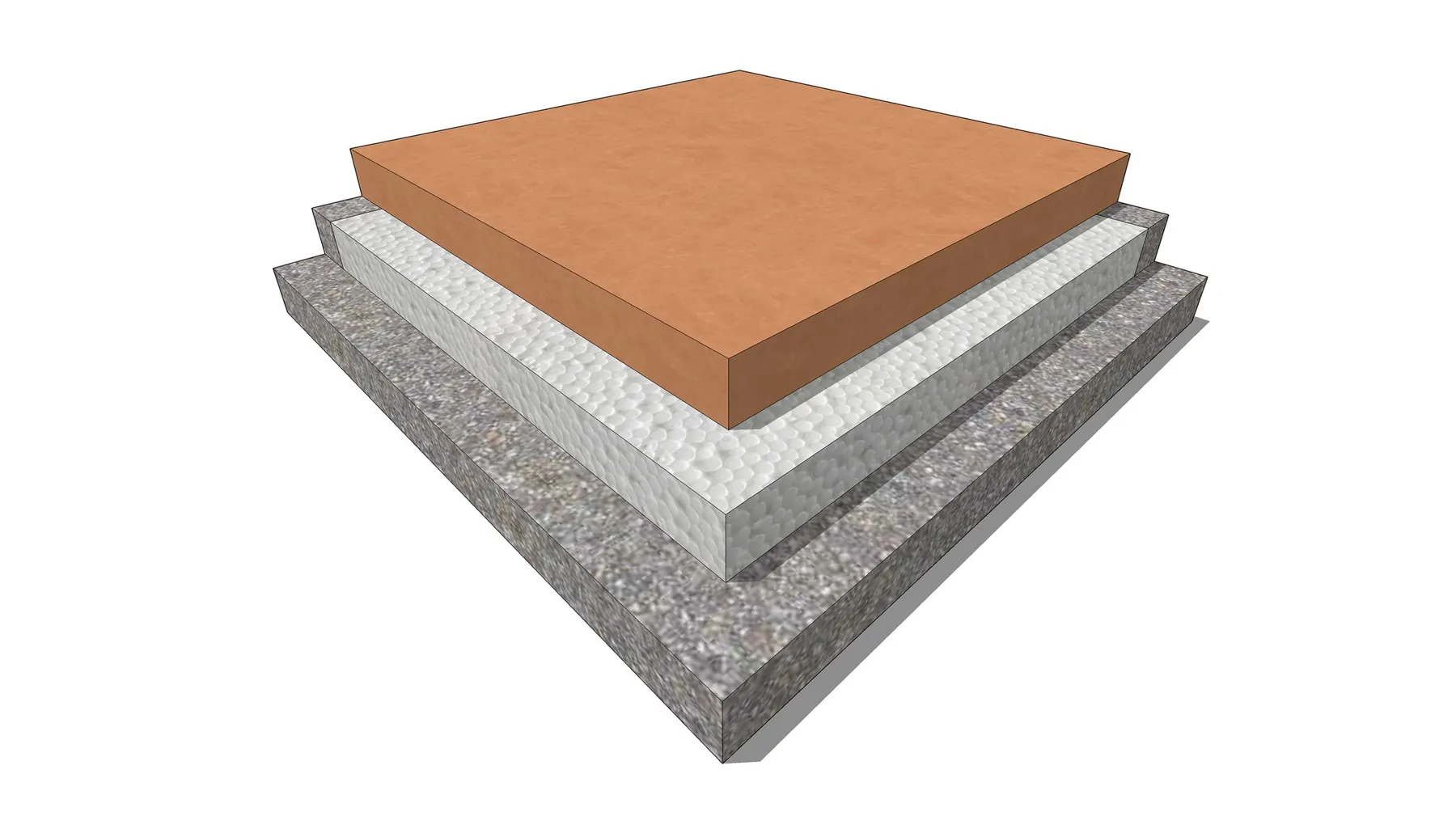
A roof heat insulation tile puts a durable walking surface and an insulating layer above the roof slab in one modular unit. It can reduce heat passing into the occupied floor below, but it does not replace waterproofing, falls or a properly detailed roof build-up.
The useful question is not whether a tile is simply called insulating. It is what sits inside it, how the roof beneath it is prepared and how the measured performance relates to the proposed building.
The three layers
The AFINISHES unit is a 12 by 12 by 2 inch tile made as three bonded layers.
- A half-inch wearing face takes the weather and foot traffic. It may be plain cement, exposed terrazzo or washed terrazzo.
- A one-inch expanded polystyrene core provides most of the thermal resistance.
- A half-inch foam-concrete base supports the core and gives the unit a stable laying surface.
The face is a finish decision. The core is the principal thermal component. Keeping those two functions distinct makes it easier to compare options without confusing colour or aggregate with insulation.
Reading the temperature figures
On Karachi roofs, our measurements have shown temperature differences across the tile of about 12 to 14°C for the premium terrazzo build-up, 10 to 12°C for washed terrazzo and 5 to 6°C for the plain cement version.
These are field observations across the tile, not laboratory U-values and not a promise of the room-temperature reduction in every building. Roof colour, solar exposure, wind, moisture, slab construction, ceiling build-up and air conditioning all affect the result. A project that needs a code value or a whole-roof heat-flow calculation should have the complete assembly assessed by the project consultant.
What the system can improve
The insulating layer interrupts the direct path from a sun-heated wearing surface to the structural slab. That can lower the heat stored by the roof and reduce the late-afternoon load on the floor below. The modular wearing face also protects the layers beneath from normal service traffic and gives the roof a repairable surface.
The result is particularly useful where the top floor is occupied and the roof is exposed for most of the day. A shaded plant roof and an open residential terrace have different loads, so they should not be specified from the same assumption.
What it does not replace
Waterproofing remains a separate continuous layer. It needs correct upstands, outlets and terminations before the tiles are laid. The roof also needs adequate falls so water does not remain trapped around the paving.
The tile is walkable, but equipment bases, tanks and concentrated loads need their own structural review. Penetrations for services should be coordinated before installation rather than cut through a finished waterproofed roof as an afterthought.
Choosing the wearing face
Plain cement is the direct service-roof option. Washed terrazzo gives a textured aggregate face. Polished or premium terrazzo gives a more finished terrace but needs the same care around drainage and wet-use slip performance as any other hard surface.
Colour affects solar absorption as well as appearance. A light sample generally absorbs less solar energy than a dark one, but the actual roof assembly and exposure still decide the useful result.
Before ordering
Confirm the roof area, levels, falls, outlets, parapet details and access route. Record the waterproofing system and any restrictions its supplier places on the layers above it. Then select the face from the roof heat insulation tile library and approve a physical sample in daylight.
A layered roof tile works best when its role is precise: a durable finish with an insulating core, placed over a roof that is already designed to drain and stay watertight.
Hold the material before you specify it
Send the finish codes and the room, and we will come back with samples and a quote.